
Last Updated: November 8, 2026
Quick Summary
The most important tip for hiring an emergency restoration company is to act fast: shut off the water source, document the damage and get a crew moving quickly, because the clock for emergency restoration starts when the water stops flowing. Before you sign, ask for a written arrival window, a single point of contact, a written scope and payment terms.
- Shut off the water at the main valve or appliance supply line, then kill power to flooded rooms only if you can reach the breaker dry.
- Ask for the company’s on-site arrival window in writing instead of accepting “as soon as possible.
- Verify IICRC certification through the registry and confirm the certificate belongs to the company, not just one technician.
- Request a certificate of insurance sent directly from the insurer or agent, and confirm the policy is active.
- Never sign a work authorization that assigns your insurance benefits or has an open-ended price with no cap.
Table of Contents
- Why the First Hour Decides the Outcome
- Questions to Ask a Restoration Company Before You Sign
- Restoration Company Certifications and Insurance You Must Verify
- What a Water Damage Restoration Estimate Should Include
- Comparing Estimates and Avoiding Scams
- How Restoration Company Insurance Claims Work
- Residential vs. Commercial Response: What Changes
- Request Emergency Help in Prior Lake
- Frequently Asked Questions
Why the First Hour Decides the Outcome
Water spreads faster than most people expect. Within minutes, it wicks into drywall, subfloor and insulation. Within hours, furniture finishes start bleeding into carpet and metal fixtures begin to tarnish. If you are searching for tips for hiring an emergency restoration company, the most important one is this: the clock for emergency restoration starts the moment the water stops flowing, not the moment you find a contractor.
At SOS Cleaning & Restoration, we serve homeowners and property managers across Prior Lake, MN, and the surrounding area. Emergency calls go best when someone shuts off the source, documents the damage and gets a crew moving quickly.
Your First-Hour Emergency Checklist
Do these in order before you call anyone:
- Shut off the water at the main valve or the appliance supply line.
- Kill power to any flooded room at the breaker panel, but only if you can reach it dry.
- Photograph and video every affected room before you move anything.
- Move furniture, rugs and electronics off wet flooring.
- Call your insurer’s claims line to open a file and get a claim number.
- Call a restoration company and ask for their on-site arrival window in writing.
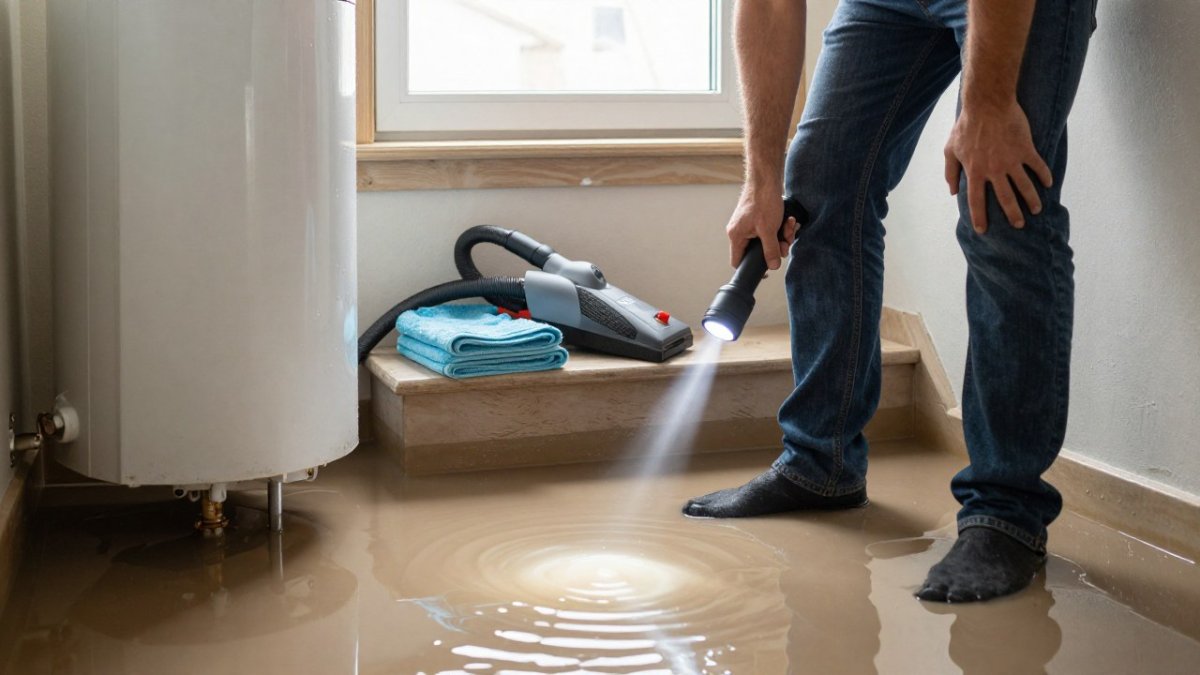
Watch out: never wade into standing water near outlets, appliances or a wet breaker panel. Shock risk is real, and it is the one hazard a homeowner should never test.
Prior Lake Emergency Guidance for Burst Pipes and Flooding
Burst supply lines and sump failures are the two calls we hear most in this area, and both follow the same pattern: the damage is worse than it looks because water travels under flooring and inside wall cavities. If you are dealing with mold risk after a flood, our mold removal in Prior Lake service can help. For a deeper look at how arrival speed changes outcomes, read the factors that decide emergency water mitigation response time.
Questions to Ask a Restoration Company Before You Sign
Ask these before anyone starts work, and write the answers down:
- How soon will a crew actually arrive? Get a window, not “as soon as possible.”
- Who is my single point of contact? One name and one number for the whole job.
- Will you handle documentation for my insurance claim? Photos, moisture readings and a written scope.
- What is the scope of work, and what is excluded? Get it in writing before demolition.
- What are the payment terms? When deposits are due, and whether work pauses if the claim is delayed.
- Who performs the work? Employees or subcontractors, and are they certified?
A company that hesitates on any of these is a company to keep looking past.
Restoration Company Certifications and Insurance You Must Verify
Verification is simple and takes five minutes. Ask for the certificate, then confirm it yourself rather than trusting a logo on a van.
IICRC certification is the industry benchmark for water damage and mold work. The IICRC certification and standards registry lets you look up a firm’s credentials directly.
Licensing and registration vary by state. In Minnesota, check the business through the Minnesota Secretary of State business search to confirm the company is active and registered, and confirm the name on the estimate matches the name on the registration. A mismatch between the company you called and the entity doing the work is a reason to pause.
Insurance matters more than most homeowners realize. Ask for a certificate of insurance showing general liability and workers’ compensation, and check that the policy is current and names the correct business entity.
How to Verify Credentials and Scope, Not Just Ask
Asking is the easy part; confirming is what separates a real check from a courtesy nod.
Subcontractors are the part most homeowners miss. Many restoration companies use subcontractors for demolition, reconstruction, electrical or HVAC work, and those subs carry their own licenses and insurance. Ask which portions of your job will be subcontracted and request the same certificate of insurance for each sub before they start.
Certification is not just a plaque. Ask the company to describe its drying goal in writing, the target moisture content for the materials in your home and how it will be measured, and you will quickly learn whether the credential reflects practice or just marketing.
What a Water Damage Restoration Estimate Should Include
A water damage restoration estimate is a written, itemized scope of work that lists the affected areas, the extraction and drying equipment to be used, the materials to be removed, and the daily monitoring plan. If an estimate is a single lump sum with no line items, ask for a detailed version before you agree to anything.
A complete estimate should cover:
| Line item | What it should say |
|---|---|
| Damage assessment | Rooms affected, moisture readings, category of water |
| Extraction and mitigation | Equipment type, days of drying, monitoring visits |
| Demolition | Exactly which materials come out and why |
| Structural drying | Target moisture levels and how they are verified |
| Contents and cleaning | What is restored versus discarded |
| Reconstruction | What is repaired and what is excluded |
| Documentation | Photos and reports provided to your insurer |
Ask how the company verifies drying is complete. The answer should involve moisture meters and daily readings, not a technician’s hand on the drywall.
Emergency Pricing and Payment Safeguards
A clear estimate should explain how emergency work is priced compared with scheduled work, and it should separate its cost components rather than folding them into one number. Ask which charges are fixed and which can move as the job unfolds.
Change orders are the pressure point. When a crew opens a wall and finds wet insulation or a hidden cavity, the scope changes, and that change should be documented in a signed change order before the extra work proceeds.
On payment, ask each company to explain its deposit and billing terms. Be cautious with any request for full cash payment before work begins, and confirm whether the company bills your insurer directly or expects you to pay and seek reimbursement.
Comparing Estimates and Avoiding Scams
Two estimates rarely match, and that is normal. What matters is whether each one describes the same scope. Compare line by line: if one bid omits demolition or contents handling, the lower number is not actually lower.
Red flags we see homeowners describe:
- A crew that arrives unrequested after a storm and pressures you to sign on the spot.
- A demand for full payment upfront in cash.
- No physical business address, no written contract, no certificate of insurance.
- An estimate that changes substantially after work begins with no signed change order.
Get everything in writing, including change orders. A legitimate company will never resent the question.
How Restoration Company Insurance Claims Work
Most homeowner policies cover sudden water damage from a burst pipe or appliance failure, but coverage depends on your specific policy, so confirm the details with your insurer rather than assuming. The Minnesota Department of Commerce insurance guide explains how to file a claim and what your rights are as a policyholder.
The restoration company’s role in a claim is documentation. A good crew photographs everything before demolition, records moisture readings, provides a written scope and communicates directly with your adjuster. You remain the policyholder and the decision-maker; the contractor supplies the evidence your adjuster needs.
Ask one question before signing: “Will you bill my insurer directly, or do I pay and get reimbursed?” The answer shapes your cash flow, and it should be clear before work starts.
Residential vs. Commercial Response: What Changes
Commercial losses involve more than square footage. A flooded office or rental property raises questions about tenant relocation, business interruption, after-hours access and liability. Response usually runs around the clock so work happens outside business hours, and documentation has to satisfy both the property owner and the tenant’s insurer.
Property managers should ask for a single point of contact, a written schedule, and confirmation the crew carries liability coverage that satisfies the building’s requirements. For commercial work in the metro, our complete restoration for homes and businesses outlines what the process covers.
Request Emergency Help in Prior Lake
If water is in your home or building right now, stop reading and start calling. Our 24/7 local emergency response team is available around the clock, and our water damage restoration in Prior Lake, MN covers extraction, structural drying, cleanup and repair.
SOS Cleaning & Restoration is locally owned, and our certified specialists are IICRC certified. When you call at 2 AM, you reach a local team.
Get started with SOS Cleaning & Restoration and request emergency help before the damage spreads.
Water damage gets more expensive with every hour it sits, and the difference between a dried-out home and a mold problem usually comes down to who you called and how fast they arrived. SOS Cleaning & Restoration offers 24/7 emergency response, IICRC-certified technicians and locally owned service in Prior Lake, with full documentation for your insurance claim.
Frequently Asked Questions
What should I look for when hiring an emergency restoration company?
Look for 24/7 availability with a stated response time, IICRC certification, current licensing and liability insurance, and a written estimate before work begins. Ask for local references and read recent online reviews. A company that answers at 2 AM, explains its drying process, and puts the scope of work in writing is a safer bet than one that quotes a number over the phone without seeing the damage.
How quickly should an emergency restoration company respond to water damage?
Ask for a specific window, not just ’24/7.’ In practice, water keeps spreading through drywall, subfloor, and insulation every hour it sits, and mold can begin within 24 to 48 hours in damp conditions. A crew that arrives within a few hours to extract water and set up structural drying limits how much of the home has to be torn out later.
Should I contact my insurance company before hiring a restoration contractor?
Report the loss to your insurer early so the claim is on record, but you can call a restoration company first to stop the damage. Most policies require you to mitigate further damage, and extraction counts as mitigation. Keep receipts, photograph everything before cleanup, and confirm with your adjuster whether the company should bill you directly or submit documentation to the insurer.
What should a water damage restoration estimate include?
A detailed estimate should list the scope of work room by room, moisture readings and where they were taken, extraction and structural drying equipment, demolition of unsalvageable materials, contents restoration, and any mold remediation if found. It should also state the project timeline, payment terms, and whether the price is fixed or subject to change if hidden damage appears.
How do I verify a restoration company’s certifications and insurance?
Ask for the IICRC certification number and confirm it directly with the certifying body. Request a certificate of insurance showing both general liability and workers’ compensation, then call the insurer to confirm the policy is active. A legitimate company will hand these over without hesitation; resistance is a warning sign.
What are warning signs of an unreliable restoration company?
Watch for large cash deposits demanded upfront, no written contract, no physical address, pressure to sign before you have read the terms, and estimates given without an inspection. Also be wary of anyone who discourages you from contacting your insurer or who cannot name their IICRC certification. These patterns are common in post-disaster scam activity.
