
Last Updated: October 30, 2026
Quick Summary
Water mitigation response time is the clock that starts when you call for help and stops when a trained crew reaches your door. Seven factors decide how fast that crew arrives, including whether you called a local team or a national dispatch line, time of day, weather, call volume, distance, access, and staffing.
- Shut off the main water valve first, turning the handle clockwise until it stops.
- Ask whether a live person answers at 2 AM or whether you get a voicemail and a callback in the morning.
- Clear the path to the leak by moving cars, unlocking gates, and leashing pets before the crew arrives.
- The drying stage typically runs several days, and materials that look dry can hold moisture deep inside.
- Choose a crew that uses moisture meters and thermal imaging to find hidden water and checks readings daily.
Table of Contents
- What Emergency Water Mitigation Service Response Time Actually Means
- How to Shut Off the Main Water Valve Before Help Arrives
- What to Do After Water Damage While You Wait for the Crew
- 7 Factors That Change Water Mitigation Response Time
- The Water Damage Restoration Timeline, From Call to Dry
- How to Choose Emergency Water Removal Services in Prior Lake
- Request Emergency Help Before the Damage Spreads
- Frequently Asked Questions
What Emergency Water Mitigation Service Response Time Actually Means
Water mitigation response time is the clock that starts when you call for help and stops when a trained crew reaches your door. That window matters more than almost anything else in a water damage event, because standing water and soaked materials get worse with every hour. For a deeper look at why water damage restoration in Apple Valley is decided before the truck ever arrives, the call itself is where the outcome starts.
A fast arrival means less water to pull, fewer materials to tear out, and a smaller chance that mold takes hold behind your walls.
Below, we’ll show you exactly what shapes that response window and how to protect your home while you wait.
FEMA guidance on flood water cleanup and safety
How to Shut Off the Main Water Valve Before Help Arrives
Shutting off the main water valve is the first thing to do when water is pouring from a broken pipe or failed appliance. Stop the source, and you turn a spreading flood into a manageable puddle.
Here is the short version:
- Find your main shutoff valve. It is usually near the water meter, in a basement, utility closet, or crawl space.
- Turn the handle clockwise until it stops. Gate valves spin several turns; ball valves turn a quarter turn.
- Open a low faucet to drain pressure from the lines.
- If you cannot find it, call your water utility and ask them to shut it off at the street.
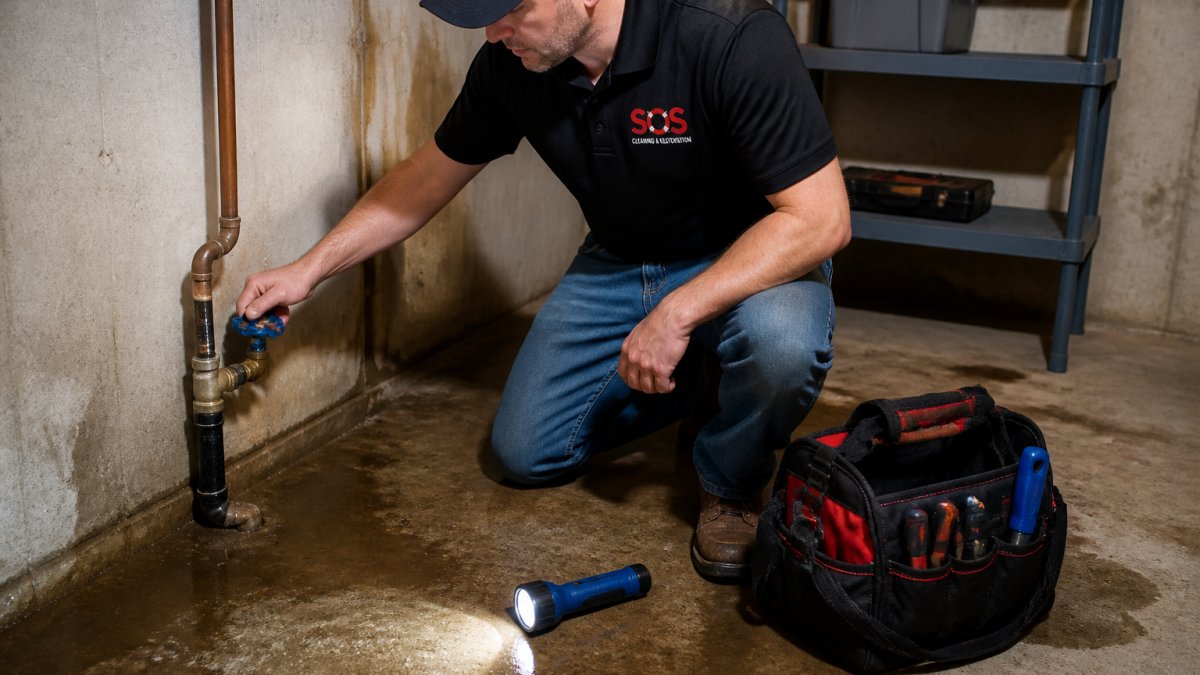
Watch out: turning the valve the wrong way or forcing a stuck handle can snap the stem and make the leak worse. If the valve will not budge, leave it and call for help.
What to Do After Water Damage While You Wait for the Crew
What you do after water damage in the first hour has a real effect on the final repair bill. The goal is simple: cut the water, cut the power to wet areas, and get valuables off the floor.
Work through this list while you wait:
- Shut off electricity to flooded rooms at the breaker panel, but only if you can reach it while standing on dry ground.
- Move furniture, rugs, and electronics out of the wet zone.
- Snap photos and short videos of everything before you touch it. Your insurer will want them.
- Blot standing water with towels and run fans if it is safe.
- Do not walk through water near outlets or downed cords.
A common mistake is waiting to call until the water looks “serious enough.” By then, drywall and subfloor have already soaked up moisture. If you are unsure whether homeowners insurance will cover the water damage, check that early too, because it shapes your next steps.
EPA advice on mold and moisture control after water damage
7 Factors That Change Water Mitigation Response Time
Seven things decide how fast a crew reaches you. Some you control, and some you do not.
The biggest one is whether you called a local team or a national dispatch line. A local crew knows the streets, the housing stock, and the shortcuts. A distant call center has to find you first.
Here is what else moves the needle:
- Time of day: Overnight and weekend calls can stretch arrival if a provider is not truly staffed around the clock.
- Weather: A metro-wide storm floods the call queue and slows every crew.
- Call volume: During a freeze event, burst-pipe calls stack up fast.
- Distance: A shop across the county takes longer than one in town.
- Access: Locked gates, snowed-in driveways, and tight parking add minutes.
- Property size: A large commercial building needs more equipment staged before work starts.
- Staffing: A provider with on-call technicians answers faster than one running a skeleton crew.
Time of Day, Weather, and Call Volume
A 2 AM Sunday call is the real test of a “24/7” claim. Ask any provider you call whether a live person answers at that hour or whether you get a voicemail and a callback in the morning.
Weather is the wild card. When a hard freeze hits the Twin Cities metro, dozens of homes call at once. The crew that answers first and stages equipment early wins.
Distance, Access, and Property Size
Distance is easy to check. Ask where the crew is based and how long the drive really is.
Access is the one people forget. Make sure the path to the leak is clear. Move cars, unlock gates, and leash pets before the crew arrives.
Property size changes the plan, not the clock. A big commercial building needs more drying equipment, so the setup takes longer even after the truck pulls in.
The Water Damage Restoration Timeline, From Call to Dry
A typical water damage restoration timeline runs from the first call through drying and final repairs. The exact length depends on how much water soaked in and how fast it was stopped.
Most jobs move through these stages:
| Stage | What Happens | Typical Duration |
|---|---|---|
| 1. Call and dispatch | You call, crew is assigned, drive begins | Minutes to a couple hours |
| 2. Inspection | Moisture readings, source confirmed, plan set | Under an hour |
| 3. Water extraction | Pumps and wet vacuums pull standing water | A few hours |
| 4. Drying | Air movers and dehumidifiers run | Several days |
| 5. Cleaning and repair | Sanitizing, drywall, flooring, paint | Days to weeks |
The drying stage is where patience pays off. Materials that look dry on the surface can hold moisture deep inside.
IICRC standards for professional water damage restoration
How to Choose Emergency Water Removal Services in Prior Lake
Choosing emergency water removal services in Prior Lake comes down to four checks: real 24/7 staffing, local distance, certification, and a clear plan for finding hidden moisture.
Run through this checklist before you commit:
- Does a live person answer the phone at any hour?
- Is the crew based nearby, not dispatched from out of state?
- Are the technicians certified, and can they show it?
- Will they use moisture meters and thermal imaging to find hidden water?
- Do they explain the drying plan and check readings daily?
- Will they work directly with your insurer?
For a direct look at local emergency help, you can get damage restoration in Prior Lake, MN with cleanup, drying, and repair under one roof.
Speed without a drying plan can just move the problem. A crew that arrives quickly but skips moisture checks can leave hidden moisture behind.
Request Emergency Help Before the Damage Spreads
Water damage rewards speed and punishes delay. Every hour that water sits gives it more time to wick into studs, subfloor, and insulation.
If you are weighing a call right now, make it. SOS Cleaning & Restoration offers emergency water damage services, and our certified specialists can be reached through our emergency line.
You can reach our emergency line to request help. If you want to understand how fast unresolved water turns into extreme damage, read why every minute counts before you wait another hour.
Frequently Asked Questions
How quickly should an emergency water mitigation company respond?
A dependable company gives you a clear arrival window when you call and usually reaches a local property within a couple of hours. Ask for that window up front and get a phone number for the crew. Fast water mitigation response matters because standing water spreads into subflooring, drywall, and framing within hours, and mold can begin growing on wet materials in as little as 24 to 48 hours.
What should I do while waiting for a water mitigation team?
Shut off the water at the main valve if the source is a supply line, then cut power to any flooded area at the breaker only if you can reach it safely. Move furniture and rugs off wet carpet, lift items off the floor, and take photos of the damage for your insurance claim. Do not run a household vacuum over standing water, and stay out of rooms where water may have reached outlets or electrical panels.
Does a faster response reduce the risk of mold after water damage?
Yes. Mold needs moisture, and the clock starts once materials stay wet. Extraction and drying begun early pull moisture out before it soaks into drywall, insulation, and wood, which lowers the chance of a mold problem later. If water sat for a day or more before a crew arrived, ask the company to check for hidden moisture in walls and under flooring, and discuss mold remediation as part of the scope.
What information should I give a water mitigation company when I call?
Tell them your address, when the water started, and what caused it, such as a burst pipe, appliance failure, or sump pump issue. Say whether the water is still running and whether you have shut off the main valve. Describe which rooms are affected, how deep the water is, and whether you see sewage or dark water. Mention pets, accessibility issues, and your insurance carrier so the crew arrives prepared.
When water is spreading across your floor, the response clock is the one thing you can still control. Call SOS Cleaning & Restoration for 24/7 emergency response, IICRC-certified technicians, and a drying plan that protects your home from mold. Get started with SOS Cleaning & Restoration and stop the damage before it spreads.
