
Last Updated: November 4, 2026
Quick Summary
Commercial water damage restoration services follow seven steps: shut off the main water valve, emergency response and damage assessment, water extraction, structural drying and dehumidification, moisture detection and monitoring, cost and insurance documentation, and final repairs. Shutting off the supply first stops the damage from spreading, and daily moisture readings confirm materials are drying on schedule.
- Shut the main water valve clockwise until it stops, then open a low faucet to drain pressure.
- Never wade near electrical panels or outlets to reach a valve; shut off power at the breaker first.
- Extraction comes before drying because you cannot dry a floor still under an inch of water.
- Drying is finished when structural moisture readings return to a normal range, not when surfaces feel dry.
- Documentation for adjusters includes date-stamped photos, daily moisture readings, and a written scope of loss.
Table of Contents
- Why Commercial Water Damage Demands a Different Response
- Step 1: How to Shut Off the Main Water Valve Before Crews Arrive
- Step 2: Emergency Response and Damage Assessment
- Step 3: Water Extraction and Removal
- Step 4: Structural Drying and Dehumidification
- Step 5: Moisture Detection and Monitoring
- Step 6: What Commercial Water Damage Restoration Cost Covers
- Step 7: The Water Damage Restoration Timeline and Final Repairs
- Frequently Asked Questions
Why Commercial Water Damage Demands a Different Response
A burst pipe above a drop ceiling doesn’t wait for business hours. Water travels through a commercial building faster than most owners expect, and every hour it sits raises the cost of the repair. This guide walks through the seven steps professional commercial water damage restoration services typically follow, from the moment you shut off the valve to the day your space reopens.
Water damage restoration is the process of extracting standing water, drying building materials, and repairing what the moisture damaged. In a commercial building, that process carries higher stakes than in a house. Offices, retail spaces, and apartment buildings hold equipment, inventory, and tenant property. One soaked server room or ruined stockroom can halt revenue for weeks.
The response differs from residential work in three ways:
- Scale. Commercial square footage means more water, more materials, and more drying equipment running at once.
- Occupant safety. Employees, customers, and tenants share the space. Slip hazards, contaminated water, and air quality become liability issues.
- Business continuity. A homeowner can stay with family. A business still has payroll, leases, and customers to serve.
That’s why commercial water damage calls for a faster, more documented approach. SOS Cleaning & Restoration handles water damage mitigation and mold mitigation for businesses in the Prior Lake area. Below, we’ll show you exactly what the process looks like, step by step.
Step 1: How to Shut Off the Main Water Valve Before Crews Arrive
The first thing to do when water is pouring into your building is shut off the main water valve. Every minute the supply stays open adds more water to the floor, walls, and ceilings.
Here’s how to shut off main water valve locations in a typical commercial property:
- Find the main shutoff. It’s usually near the water meter, in a utility closet, or where the supply line enters the building.
- Turn the valve clockwise until it stops. A gate valve needs several full turns; a ball valve needs a quarter turn.
- Open a low faucet to drain pressure from the lines.
- If the leak comes from a fixture, shut the local supply valve under the sink or behind the toilet too.
- Call your restoration team and your insurer while the water is still draining.
Watch out: if the water is near electrical panels or outlets, do not wade in to reach the valve. Shut off power at the breaker first, or wait for help.
Once the supply is off, the damage stops spreading. That single action often decides how much of your building can be saved.
Step 2: Emergency Response and Damage Assessment
Emergency response is the phase where a crew arrives, secures the site, and assesses the damage. Water damage doesn’t keep business hours, so emergency response matters at any time of day.
During assessment, technicians check the source of the water, how far it spread, and which materials absorbed it. They also classify the water itself. Clean water from a broken supply line is treated differently from gray water or sewage, which carries contamination and requires protective measures and disposal rules. Understanding the factors behind how fast crews can reach your building helps you set realistic expectations when you call.
This is also when documentation starts. Photos, moisture readings, and a written scope of damage matter later when you file a claim. If you’re in Prior Lake and need water damage restoration for flood and leak damage, a local crew can often be on site faster than a company driving in from another county. For readers closer to the south metro, our Prior Lake water damage restoration team is available around the clock for urgent calls.
Step 3: Water Extraction and Removal
Water extraction is the physical removal of standing water using pumps, wet vacuums, and extraction wands. It comes before drying, because you can’t dry a floor that’s still under an inch of water.
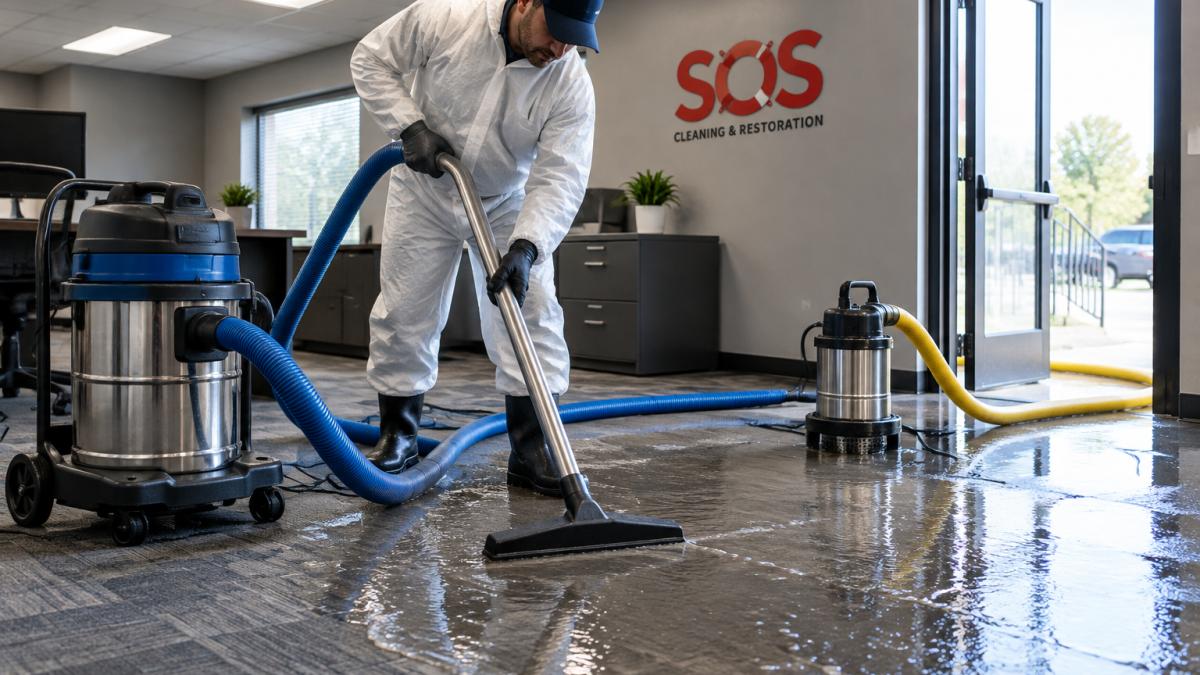
Watch out: don’t run a standard shop vacuum in standing water near outlets, and don’t assume the carpet is salvageable just because it looks dry on top. Padding holds water for days. If you’re tempted to handle a large spill yourself, read about the pitfalls of DIY water restoration before you start pulling up flooring.
Step 4: Structural Drying and Dehumidification
Structural drying is the controlled removal of moisture from building materials using air movers and dehumidifiers. Extraction gets the water you can see. Drying gets the water trapped inside drywall, subfloor, and framing.
Step 5: Moisture Detection and Monitoring
Moisture monitoring is the daily check that confirms materials are drying on schedule.
Step 6: What Commercial Water Damage Restoration Cost Covers
Commercial water damage restoration cost depends on the size of the affected area, the category of water, how long it sat, and which materials need replacement.
Most estimates break down into several line items:
| Cost Factor | What It Includes | Why It Varies |
|---|---|---|
| Extraction and drying | Pumps, air movers, dehumidifiers, labor | Square footage and water depth |
| Material removal | Cut-out drywall, carpet, insulation | How much absorbed water |
| Cleaning and sanitizing | Contaminated surfaces, air quality | Water category |
| Repairs and rebuild | Framing, flooring, paint, fixtures | Extent of structural damage |
| Monitoring and documentation | Daily readings, moisture logs | Length of drying period |
What most cost guides skip is the insurance side, which is where commercial losses are usually won or lost. Standard commercial property policies commonly cover sudden and accidental discharge, a burst supply line, a failed water heater, a sprinkler head that let go, while excluding long-term seepage, repeated leaks, and flood, which requires a separate policy through the National Flood Insurance Program or a private flood carrier. Before work begins, confirm whether your policy pays replacement cost or actual cash value, because the difference can be substantial on older flooring, ceilings, and built-in fixtures.
Documentation is the part a business owner controls. A claim file that adjusters can process quickly usually includes:
- Date-stamped photos and video of standing water, damaged inventory, and affected rooms before anything is moved.
- Moisture readings from the restoration contractor, logged daily with the meter’s location and the material tested.
- A written scope of loss that separates emergency mitigation from permanent repairs.
- Inventory and equipment lists with purchase dates and values for damaged stock, furniture, and electronics.
- Receipts and invoices for emergency purchases such as pumps, fans, or temporary power.
Business interruption coverage is a separate conversation. If your policy includes it, the claim may cover lost income and extra expenses, temporary relocation, overtime, rented equipment, while the building is unusable. That coverage usually requires proof of what your business would have earned, so keep sales records, payroll, and lease documents ready. A common pattern is for owners to focus entirely on the building and discover weeks later that they never opened the business interruption portion of the claim.
Watch out: don’t sign a repair contract or authorize demolition beyond emergency mitigation before your adjuster has seen the damage, unless the contractor documents why the work could not wait. Most policies require mitigation to prevent further damage, but permanent repairs approved before inspection can complicate reimbursement.
For current pricing on your building, contact SOS Cleaning & Restoration for an on-site assessment.
Step 7: The Water Damage Restoration Timeline and Final Repairs
The water damage restoration timeline typically runs from a few days to several weeks, depending on how much water entered, how far it spread, and which materials absorbed it.
A realistic commercial sequence looks like this:
- Day one, emergency mitigation. Extraction begins, standing water is removed, and the crew sets drying equipment. Safety checks for electrical hazards and contaminated water happen before anyone works in the affected area.
- Days two through five, monitored drying. Technicians return daily to record moisture readings in walls, floors, and ceilings. Air movers and dehumidifiers are repositioned as readings change. Drying is not finished when surfaces feel dry; it is finished when readings in the structural materials return to a normal range for the building and the local climate.
- Days five through ten, verification and scope confirmation. Once readings stabilize, the contractor confirms which materials can be saved and which must be removed. This is the point where the repair scope is finalized and, ideally, shared with your adjuster.
- Week two and beyond, permanent repairs. Drywall replacement, flooring, paint, and fixture work follow. The duration depends on material availability, permit requirements, and whether the space must stay partially open during repairs.
If you want to know what separates a company that truly saves a building from one that only dries it, read this guide to choosing restoration services.
Frequently Asked Questions
What is the first step in commercial water damage restoration?
The first step is stopping the water source. Shut off the main water valve or call a plumber if the leak is from a supply line. Then call a restoration company for emergency response. Before crews arrive, document the damage with photos and move valuables away from wet areas. A certified team will then assess water categories, extract standing water, and begin structural drying with commercial dehumidifiers.
How much does commercial water damage restoration cost in Minnesota?
Commercial water damage restoration cost depends on the size of the affected area, water category, and how long the water sat before extraction. Contaminated water or mold growth adds labor and equipment time. Most commercial insurers cover sudden and accidental water damage, so document everything and file a claim early.
How long does commercial water restoration take?
The water damage restoration timeline varies by project. Repairs and reconstruction follow once materials are dry. Large commercial properties with multiple floors or contaminated water can take longer.
How do I shut off the main water valve in a commercial building?
Locate the main shutoff valve, usually near the water meter, basement wall, or utility closet. Turn it clockwise until it stops. For larger buildings, check for a separate fire-suppression valve and label it clearly. If the valve is stuck or you cannot find it, call a plumber immediately. Knowing how to shut off main water valve locations before an emergency prevents thousands of dollars in damage.
Water damage in a commercial building rarely gets better on its own, and the cost of waiting climbs with every hour. If your office, retail space, or apartment building is wet right now, call SOS Cleaning & Restoration. Our IICRC-certified team offers 24/7 emergency response, fast local arrival in the Prior Lake area, and a clear drying process backed by daily moisture checks. Get started with SOS Cleaning & Restoration and get your business back to dry, safe, and open.
