
Last Updated: November 19, 2026
Quick Summary
To find a trusted mold inspector in Prior Lake, choose a certified professional who tests and reports only, rather than one who also performs remediation. Confirm certification, third-party lab sampling, liability insurance, and a written scope of work before booking.
- A contractor who both inspects and removes mold has a reason to find mold everywhere.
- A thorough inspection includes moisture readings, thermal imaging, HVAC checks, and photo documentation.
- Ask for an itemized written quote that lists sample count, not just a flat fee.
- Keep indoor relative humidity roughly between 30 and 50 percent and measure it with a hygrometer.
- The highest-value time to schedule an inspection is late winter or early spring during snowmelt.
Table of Contents
- Why Finding the Right Mold Inspector in Prior Lake Matters
- Signs of Mold Behind Drywall You Should Not Ignore
- What a Certified Mold Inspector Actually Checks
- Mold Inspection Cost in Prior Lake MN: What Drives the Price
- Hiring a Mold Professional Checklist for Local Homeowners
- Local Climate and Home Factors That Raise Mold Risk
- Mold Inspection vs. Mold Remediation: Avoiding a Conflict of Interest
- Requesting a Mold Inspection from SOS Cleaning & Restoration
- Frequently Asked Questions
Why Finding the Right Mold Inspector in Prior Lake Matters
If you have spotted discoloration on a wall or noticed a musty smell after a leak, you are likely searching for how to find a mold inspector in Prior Lake. The right inspector gives you an honest picture of what is growing in your home and how far it has spread. The wrong one sells you a problem you may not have. Here is the difference that matters: a good inspector tests and reports, then lets you decide on cleanup. A contractor who inspects and also performs the removal has a reason to find mold everywhere. That single distinction shapes everything below, and it is the first thing most homeowners overlook.
Signs of Mold Behind Drywall You Should Not Ignore
Mold hides well. By the time you see a stain, growth has often been spreading behind the drywall for weeks. Watch for a persistent musty odor that does not fade after airing the room out, warped or bubbling paint, soft spots when you press a wall, and dark speckling along baseboards or in corners. A family member with new sneezing or irritated eyes in one room is another clue. If any of this sounds familiar, our guide on what that musty smell could be telling you explains where mold tends to hide in local homes. For a deeper look at early warning signs, read how to spot hidden mold growth before it spreads.
What a Certified Mold Inspector Actually Checks
A certified mold inspector assesses moisture, air, and surfaces to determine whether mold is present and how far it has spread. Here is what a thorough visit generally includes:
- A visual walkthrough of the basement, attic, crawl space, bathrooms, and any room with past water damage
- Moisture readings with a meter and a hygrometer to measure relative humidity
- Thermal imaging to find cool spots that suggest hidden dampness
- An HVAC inspection to check whether spores are circulating through vents
- Photo-mapped documentation of every area checked
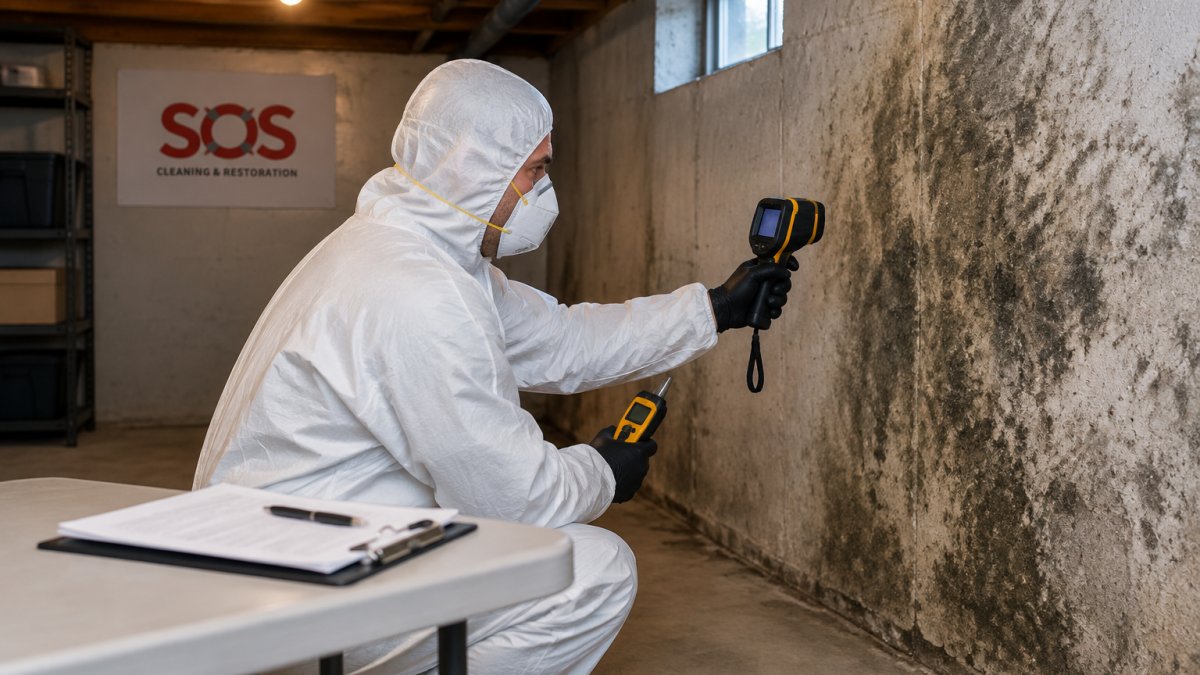
Moisture Mapping and Thermal Imaging
Moisture mapping is the process of recording damp readings across a room to build a picture of where water has traveled. Together, these readings can help point to the source of moisture rather than just the symptom.
Air and Surface Sampling Explained
Air sampling pulls a measured volume of air through a cassette to capture airborne spores. Surface sampling swabs visible growth or suspect areas. Ask for the lab name before you book, since a report you cannot trace to an independent lab is worth very little.
A thorough inspection covers these areas and tools.
| Check | What it involves |
|---|---|
| Visual walkthrough | Basement, attic, crawl space, bathrooms, past water damage |
| Moisture readings | Meter and hygrometer for relative humidity |
| Thermal imaging | Finds cool spots suggesting hidden dampness |
| HVAC inspection | Checks whether spores circulate through vents |
| Documentation | Photo-mapped record of every area checked |
| Air sampling | Measured volume of air through a cassette |
| Surface sampling | Swabs visible growth or suspect areas |
Mold Inspection Cost in Prior Lake MN: What Drives the Price
Mold inspection pricing depends on several factors, and pricing depends on the scope of work, so ask for a written quote. For current prices or a quote for your home, contact SOS Cleaning & Restoration directly.
A practical way to compare is to ask each provider for an itemized written quote and confirm what is included.
Payment and insurance are separate questions. Check with your insurer before you book, and ask the inspector whether their report format is one an adjuster will accept.
Hiring a Mold Professional Checklist for Local Homeowners
Use this checklist before you sign anything. It takes ten minutes and saves months of regret.
- Confirm the inspector holds a current certification from a recognized credentialing body
- Ask whether the company also performs remediation. If yes, ask how they separate the two roles
- Request proof of liability insurance and a written scope of work
- Confirm samples go to an independent third-party lab
- Ask for a sample report so you can see the format before booking
- Check that the quote lists sample count, not just a flat fee
- Get the inspection timeline in writing
For more on vetting restoration providers generally, see our tips for hiring an emergency restoration company.
Local Climate and Home Factors That Raise Mold Risk
Local climate can strongly influence where moisture collects in a home. Understanding the mechanism helps you know where to look and when to schedule an inspection.
The stack effect drives winter moisture. In a heated home, warm air rises and escapes through the attic while replacement air is drawn in at the basement and crawl space. That is why a damp crawl space or a basement with a failing vapor barrier matters more in January than in July: the house is actively pulling ground moisture upward and distributing it through the living space. Sealing and ventilating the crawl space, and keeping a continuous vapor barrier, interrupts that path.
Cold surfaces condense. Minnesota’s deep freezes mean basement walls, rim joists, and the sheathing behind exterior walls stay cold while indoor air stays warm and moist. Water condenses on those cold surfaces, and that film of moisture is enough to support growth. This is why mold often appears in the same spots in Prior Lake homes: the top of a basement wall, the rim joist area, the corner behind a piece of furniture pushed against an exterior wall, and the underside of roof sheathing in the attic.
Snowmelt and spring rain load the foundation. Late-winter melt and heavy spring rain push water against foundations and into window wells. Older Prior Lake homes with block foundations and finished basements are especially exposed, because block walls wick water inward and a finished wall hides the evidence. Grading that slopes toward the house, downspouts that discharge next to the foundation, and window wells without covers all make it worse.
Summer humidity and air conditioning. In humid summer months, air conditioning creates cold surfaces indoors, and the same condensation pattern returns on ductwork, supply registers, and basement walls. A finished basement that stays cool and closed up is a common place to find growth on carpet edges and behind baseboards.
HVAC distribution spreads spores. Once growth is established anywhere in the envelope, a forced-air system can move spores through the house. That is why a thorough inspection checks the air handler, the ductwork, and the return plenum, not just the room where you noticed the smell.
What this means practically: keep indoor relative humidity in the range most building scientists recommend, roughly 30 to 50 percent, and measure it with a hygrometer rather than guessing (the EPA). Run a dehumidifier in the basement and crawl space during damp months. Check the crawl space and the rim joist area after heavy rain and again at snowmelt. Fix grading and downspouts so water moves away from the foundation. And if you have had a leak, dry the area within the first 24 to 48 hours, because the window before growth establishes is short (the EPA).
Watch out: a dehumidifier running in a closed basement with no ventilation can keep the space cool and damp if the unit is undersized for the square footage. Match the unit’s pint rating to the space, and check the drain line so it is not recirculating water into the same room.
If you are scheduling an inspection, the highest-value time is late winter or early spring, when snowmelt stress is at its peak and condensation patterns are easiest to see. A summer inspection after a humid stretch is the next best window. Either way, tell the inspector about any past leaks, window well flooding, or crawl space moisture so the visit targets the right areas.
Mold Inspection vs. Mold Remediation: Avoiding a Conflict of Interest
Mold inspection is the assessment: testing, documentation, and a report on what is present. Mold remediation is the cleanup: containment, removal, and drying. When one company does both, the incentive to overstate the problem can be a concern, so consider an independent inspector first, then a remediation quote based on that report. If you hire one firm for both, ask how they document the scope and whether a third party verifies the work. Understanding the 72-hour window after water exposure helps you act fast, and our page on Prior Lake mold cleanup and the 72-hour window explains why timing matters.
Requesting a Mold Inspection from SOS Cleaning & Restoration
If you are ready to stop guessing, we can help. SOS Cleaning & Restoration is locally owned in Prior Lake, MN, and IICRC certified. Our team handles mold remediation and water damage mitigation, so if the inspection turns up growth, you have a clear next step. You can request mold removal services in Prior Lake or call us any time. Get started with SOS Cleaning & Restoration and get an honest read on your home.
Mold does not wait, and neither should you. If you have seen the signs, call SOS Cleaning & Restoration for a fast, certified assessment. Our team offers 24/7 emergency response, IICRC-certified specialists, and locally owned service in Prior Lake. Get started with SOS Cleaning & Restoration and breathe easier in your own home.
Frequently Asked Questions
How much does a mold inspection usually cost in Prior Lake, MN?
Mold inspection cost in Prior Lake MN depends on the size of the property, how many samples are taken, and whether air or surface testing is needed. Because pricing depends on scope, ask for a written quote before booking, and for current prices contact SOS Cleaning & Restoration directly. SOS Cleaning & Restoration can walk you through what a specific inspection will involve.
What certifications should a mold inspector in Prior Lake have?
Look for an inspector with a recognized industry credential, plus proof of liability insurance and training in building science. Ask whether samples go to a third-party lab for analysis, since that keeps results independent. A qualified mold inspector should also explain their methods, such as moisture mapping or air sampling, in plain terms. Request documentation of certifications before the visit so you know the assessment meets professional standards.
Is it better to hire a mold inspector who also performs remediation?
There is a conflict of interest risk when the same company inspects and remediates, because the inspector has a financial reason to find problems. Many homeowners prefer a separate inspection followed by remediation from a certified contractor. If you use one company for both, ask for third-party lab analysis and a clear written scope so the findings stay objective. Transparency about who analyzes the samples matters more than whether the services are bundled.
How do I know if I have mold behind my drywall?
Signs of mold behind drywall include musty odors, water stains, bubbling paint, soft or crumbly drywall, and visible dark speckling near baseboards or around plumbing. A hygrometer or moisture meter can help confirm elevated moisture. A certified inspector can verify with air and surface sampling before you cut into walls.
