
Last Updated: November 21, 2026
Quick Summary
Mold remediation is required when you can see mold or smell a persistent musty odor, and the U.S. Environmental Protection Agency’s guidance says to consult a professional if the moldy area is larger than roughly 10 square feet. The process follows a defined sequence: find and fix the moisture, contain the area, protect the workers, remove or clean contaminated materials, dry the space, and verify the result.
- Mold can begin colonizing wet drywall and carpet within a day or two.
- DIY cleanup suits patches under about 10 square feet on hard, nonporous surfaces with the moisture source already fixed.
- Contaminated drywall, insulation, and carpet generally cannot be cleaned and must be bagged and discarded.
- Photograph mold with a ruler or coin for scale before cleanup to support a possible insurance claim.
- After cleanup and drying, moisture readings and air sampling can confirm spore levels have returned to normal.
Table of Contents
- When Is Mold Remediation Required in Your Home
- The Mold Remediation Process for Homeowners, Step by Step
- The DIY Mold Remediation Process for Homeowners and Where It Stops
- How Long Does Mold Remediation Take
- What Mold Remediation Cost Looks Like for Homeowners
- Post-Remediation Verification and Preventing Mold From Coming Back
- Requesting Mold Remediation Help in Prior Lake
- Frequently Asked Questions
When Is Mold Remediation Required in Your Home
If you can see mold or smell a persistent musty odor in your Prior Lake home, mold remediation is likely required. The mold remediation process for homeowners starts with one question: how much growth is actually there?
A failed sump pump or a supply line that lets go overnight can soak a finished basement wall in hours, and mold can begin colonizing wet drywall and carpet within a day or two.
Visible Mold, Hidden Mold, and the 10 Square Foot Rule
The 10 square foot rule is a rough guide, not a law. A patch smaller than that on a hard, nonporous surface is often a reasonable DIY job. Anything larger, anything on porous materials, and anything that follows a sewage backup or long-standing leak belongs with a professional.
The Mold Remediation Process for Homeowners, Step by Step
Professional mold remediation generally follows a defined sequence: find and fix the moisture, contain the area, protect the workers, remove or clean contaminated materials, dry the space, and verify the result. You can see what Prior Lake mold cleanup services include before committing to a contractor.
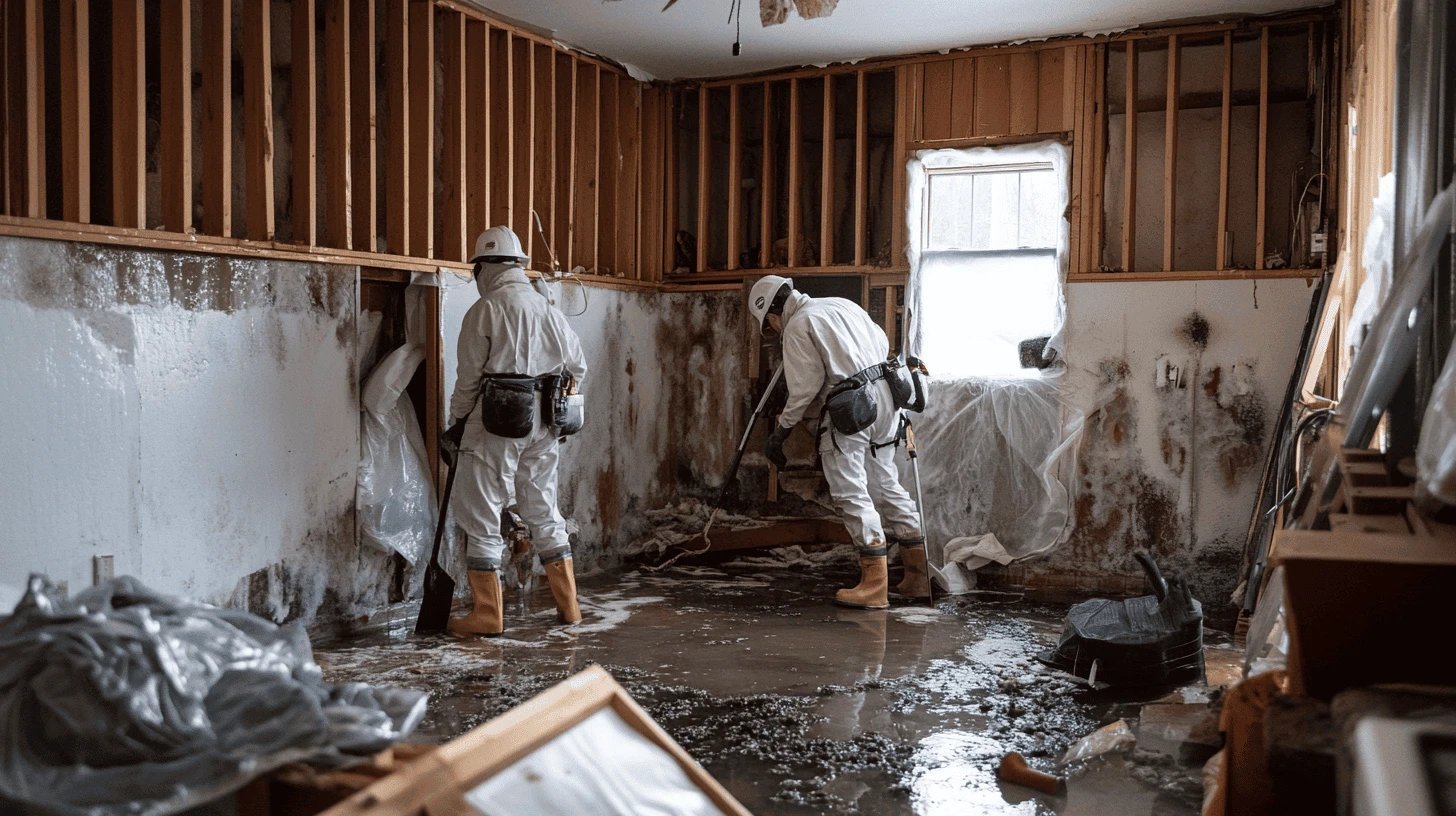
Here is the order that matters:
- Inspect and assess. Locate all affected materials and trace the moisture back to its source.
- Fix the water problem. No remediation holds if the leak, intrusion, or humidity issue continues.
- Contain the work area. Seal doorways and openings with plastic sheeting so spores cannot spread to clean rooms.
- Filter the air. Run HEPA air scrubbers and ventilate to exhaust air outdoors where possible.
- Wear protective equipment. A respirator rated for mold spores, gloves, and eye protection are the minimum.
- Remove porous materials. Drywall, insulation, and carpet that are contaminated generally cannot be cleaned and must be bagged and discarded.
- Clean hard surfaces. Scrub nonporous materials with detergent and water, then dry them completely.
- Dry and dehumidify. Bring moisture readings back to normal before closing anything up.
Containment, Air Filtration, and Personal Protective Equipment
Containment is what separates a controlled job from a cross-contamination event. Poly sheeting over doorways and sealed seams helps keep spores from spreading to clean areas of the home.
Personal protective equipment matters just as much. Respiratory protection, eye protection, and gloves are what the work requires.
Professional remediation follows a set order, and skipping a step undermines the ones after it.
| Step | What to do |
|---|---|
| 1. Inspect and assess | Locate affected materials and trace moisture to its source |
| 2. Fix the water problem | Stop the leak, intrusion, or humidity issue |
| 3. Contain the work area | Seal doorways and openings with plastic sheeting |
| 4. Filter the air | Run HEPA air scrubbers and ventilate outdoors where possible |
| 5. Wear protective equipment | Respirator rated for mold spores, gloves, eye protection |
| 6. Remove porous materials | Bag and discard contaminated drywall, insulation, and carpet |
| 7. Clean hard surfaces | Scrub nonporous materials with detergent and water, then dry |
| 8. Dry and dehumidify | Bring moisture readings back to normal before closing up |
The DIY Mold Remediation Process for Homeowners and Where It Stops
DIY mold remediation is reasonable for a small patch on a hard, nonporous surface, but the decision should be made on four factors, not square footage alone: the size of the growth, the material it is growing on, whether the moisture source is fixed, and who lives in the home. Use the thresholds below as a practical decision tree.
Clean it yourself when all of these are true:
- The visible mold covers less than about 10 square feet, roughly a 3-by-3-foot patch.
- The growth is on a hard surface such as tile, glass, metal, sealed concrete, or painted trim that can be scrubbed.
- The moisture source is identified and already corrected, not just dried.
- No one in the household is pregnant, asthmatic, immunocompromised, or otherwise sensitive to spores.
Stop and call a professional when any of these are true:
- The patch is larger than about 10 square feet, or there are several smaller patches adding up to more.
- Mold is inside a wall cavity, under flooring, above a ceiling, or in HVAC ductwork.
- The affected material is porous: drywall, insulation, carpet, carpet padding, ceiling tile, or upholstered furniture. These generally cannot be cleaned and must be removed.
- The growth follows a sewage backup, floodwater, or a leak that has been running for weeks.
A workable homeowner sequence for a qualifying small patch looks like this:
- Confirm the moisture source is fixed and the area is no longer wet
- Seal the room from the rest of the house with plastic sheeting and tape
- Put on an N95 or P100 respirator, sealed goggles, and gloves
- Scrub hard surfaces with detergent and water; bleach alone is not a substitute for removing the growth
Watch out: scrubbing dry mold without containment and a respirator can aerosolize spores and spread them to clean rooms, which is why containment comes before cleaning even on a small job.
Before you start, document the conditions. Photograph the mold with a ruler or coin for scale, photograph the moisture source, and note the date the area first got wet.
If you are unsure which side of the line you are on, an independent assessment is cheaper than a failed cleanup. Guidance on finding a trusted mold inspector in Prior Lake can help you confirm the scope before you commit.
How Long Does Mold Remediation Take
Residential mold remediation timelines vary with the size of the affected area and whether materials need to be removed and rebuilt.
Timing is not just about the work itself. Materials that stay wet for an extended period are more likely to need removal rather than drying, which can extend the schedule. If you are weighing whether to wait, what Prior Lake mold cleanup involves after that window closes is worth reading before you delay.
What Mold Remediation Cost Looks Like for Homeowners
Mold remediation cost depends on the scope of the work.
What drives the bill:
- Scope. A single wall section costs far less than a full basement.
- Access. Mold behind finished drywall means demolition and rebuild, which adds carpentry, drywall, and painting to the remediation line.
- Moisture correction. If the source is not fixed, no amount of cleaning sticks, and a return visit is likely.
- Verification. Air sampling or clearance testing adds a step to the job.
- Disposal and equipment. Bagging contaminated materials, hauling debris, and running HEPA air scrubbers and dehumidifiers for several days all carry cost.
Ask for a written scope before work begins and confirm what is included: containment, removal, drying, disposal, and any post-remediation testing.
Insurance, documentation, and claims. Whether a claim is covered often turns on the cause. Sudden, accidental water damage, such as a burst pipe or an appliance failure, is commonly treated differently from long-term seepage, repeated condensation, or neglected maintenance, which insurers may exclude. Before cleanup begins:
- Photograph the mold with a ruler or coin for scale, and photograph the moisture source.
- Keep a written timeline of when the area first got wet and what you did about it.
- Save receipts for equipment rentals, fans, dehumidifiers, and any emergency drying.
- Ask your insurer in writing what documentation the claim requires, including whether they want a professional scope of work or clearance testing.
- Do not discard contaminated materials until you have photographed them and your insurer confirms it does not need to inspect them.
Watch out: throwing out moldy drywall or carpet before documenting it can weaken an insurance claim, because the adjuster may have no way to verify the extent of the damage.
Post-Remediation Verification and Preventing Mold From Coming Back
Verification is the step homeowners skip and later regret. After cleanup and drying, a visual inspection plus moisture readings can confirm the area is dry, and air sampling or clearance testing can confirm spore levels have returned to normal before new drywall goes back up.
Prevention comes down to moisture control. A persistent musty smell after remediation usually means moisture is still present somewhere. What that musty smell could be telling you explains where mold tends to hide in Prior Lake homes.
Requesting Mold Remediation Help in Prior Lake
When the growth is beyond a small patch, or when water has been sitting for more than a couple of days, call a certified local team. If you are searching for mold remediation near me after a burst pipe or flooded basement, get fast mold cleanup and mold removal services in Prior Lake and stop the growth before it spreads.
Mold does not wait for a convenient week. If you have visible growth, a musty smell, or water that sat too long, the next step is a professional assessment. SOS Cleaning & Restoration offers 24/7 emergency response, IICRC-certified restoration experts, and locally owned service in Prior Lake. Get started with SOS Cleaning & Restoration and restore a safe, dry home.
Frequently Asked Questions
Can I live in my house during mold remediation?
It depends on the size and location of the work. Small jobs in a contained area, such as a bathroom, often let you stay in other rooms. Larger projects involving HVAC systems, bedrooms, or more than a small patch of growth usually mean moving out for a few days. Ask your contractor before work starts, and plan for pets and anyone with asthma or allergies to stay elsewhere until the area is dry and cleared.
When is professional mold remediation required instead of DIY cleanup?
Professional mold remediation is required when mold covers more than roughly 10 square feet, when it came from sewage or flood water, when it is inside HVAC systems, or when growth sits behind drywall, under flooring, or in insulation. If anyone in the home has a respiratory condition or immune issue, hire a certified firm. A moisture problem you cannot find or fix also points to professional help.
How much does mold remediation usually cost in a house?
Mold remediation cost depends on the square footage affected, how much material must be removed, whether the moisture source needs repair, and whether testing or clearance is included. Small contained jobs cost far less than whole-basement projects. Because pricing varies by scope, ask for an on-site assessment and a written estimate that separates removal, drying, and verification before you commit.
How long does mold remediation take from start to finish?
How long mold remediation takes depends on the size of the affected area and the drying required. A small, contained patch on a hard surface can be finished in a day. Larger jobs involving removed drywall, structural drying, and dehumidification take longer, and the moisture source must be corrected first or the mold returns.
Who pays for mold remediation after water damage?
Homeowners insurance often covers mold remediation when the mold resulted from a sudden, covered event such as a burst pipe or appliance failure. It usually does not cover mold from long-term neglect or repeated leaks. Document the damage with photos, keep receipts, and report the claim promptly. Review your policy language or ask your adjuster before work begins.
How do I prepare my house for mold remediation?
Clear the work area of furniture, clothing, and personal items, and move pets and plants out of the space. Turn off the HVAC system if the contractor asks, and stay out of the containment zone while work is underway. Keep children away from the area, and confirm with the contractor when it is safe to return and whether clearance testing is part of the job.
