
Last Updated: November 15, 2026
Quick Summary
To hire professional mold remediation services, choose a company that identifies the moisture source, contains the affected area, removes mold and contaminated materials, dries the structure, and verifies the air is clean afterward. Verify licensing, insurance, and IICRC certification, and get a written scope of work before approving any work.
- Mold removal is cleaning visible mold; mold remediation also fixes the moisture source and verifies the air.
- A professional inspection includes a visual survey, moisture mapping, and air or surface sampling.
- Estimates should be built from a written scope that lists removal, containment, drying, and verification separately.
- Ask for a certificate of insurance and call the insurer to confirm the policy is active.
- SOS Cleaning & Restoration offers 24/7 emergency response in Prior Lake with an IICRC certified team.
Table of Contents
- Why Hiring Professional Mold Remediation Services Matters in Prior Lake
- Mold Removal vs. Mold Remediation
- Signs of Mold Behind Drywall You Should Not Ignore
- What to Expect During a Professional Mold Inspection
- Hire Professional Mold Remediation Services Cost: What Drives Your Estimate
- How to Read Hire Professional Mold Remediation Services Reviews
- Request Emergency Mold Help in Prior Lake
- Frequently Asked Questions
Why Hiring Professional Mold Remediation Services Matters in Prior Lake
Mold can go from a small damp patch to a full-blown problem in a matter of days, and in Prior Lake’s humid summers and freeze-thaw winters, that timeline gets even shorter. When you hire professional mold remediation services, you can expect trained technicians and proper containment rather than surface-only cleaning.
Here is the part most homeowners miss: mold is rarely a surface issue. It grows inside wall cavities, under flooring, and behind cabinets where you cannot see it. A shop vac and a bottle of bleach will not reach it, and the moisture feeding it will keep the colony alive. That is why professional remediation focuses on finding and fixing the water source first, then removing the growth safely.
SOS Cleaning & Restoration is a locally owned business in Prior Lake, MN, offering 24/7 emergency response.
Mold Removal vs. Mold Remediation
Mold removal is the physical act of cleaning visible mold from surfaces. Mold remediation is the full process: finding the moisture source, containing the affected area, removing mold and contaminated materials, drying the structure, and verifying the air is clean afterward.
The distinction matters more than most people realize. Removal without remediation is why mold returns. If you scrub a wall but never fix the leak behind it, the colony regrows within weeks. Remediation addresses the cause, not just the symptom.
A proper remediation scope typically includes moisture source identification, containment to limit spore spread, removal of materials that cannot be saved, structural drying, and post-remediation verification.
If you are wondering what happens when cleanup gets delayed, the 72-hour window after water exposure explains the stakes and what families face when that window is missed.
Signs of Mold Behind Drywall You Should Not Ignore
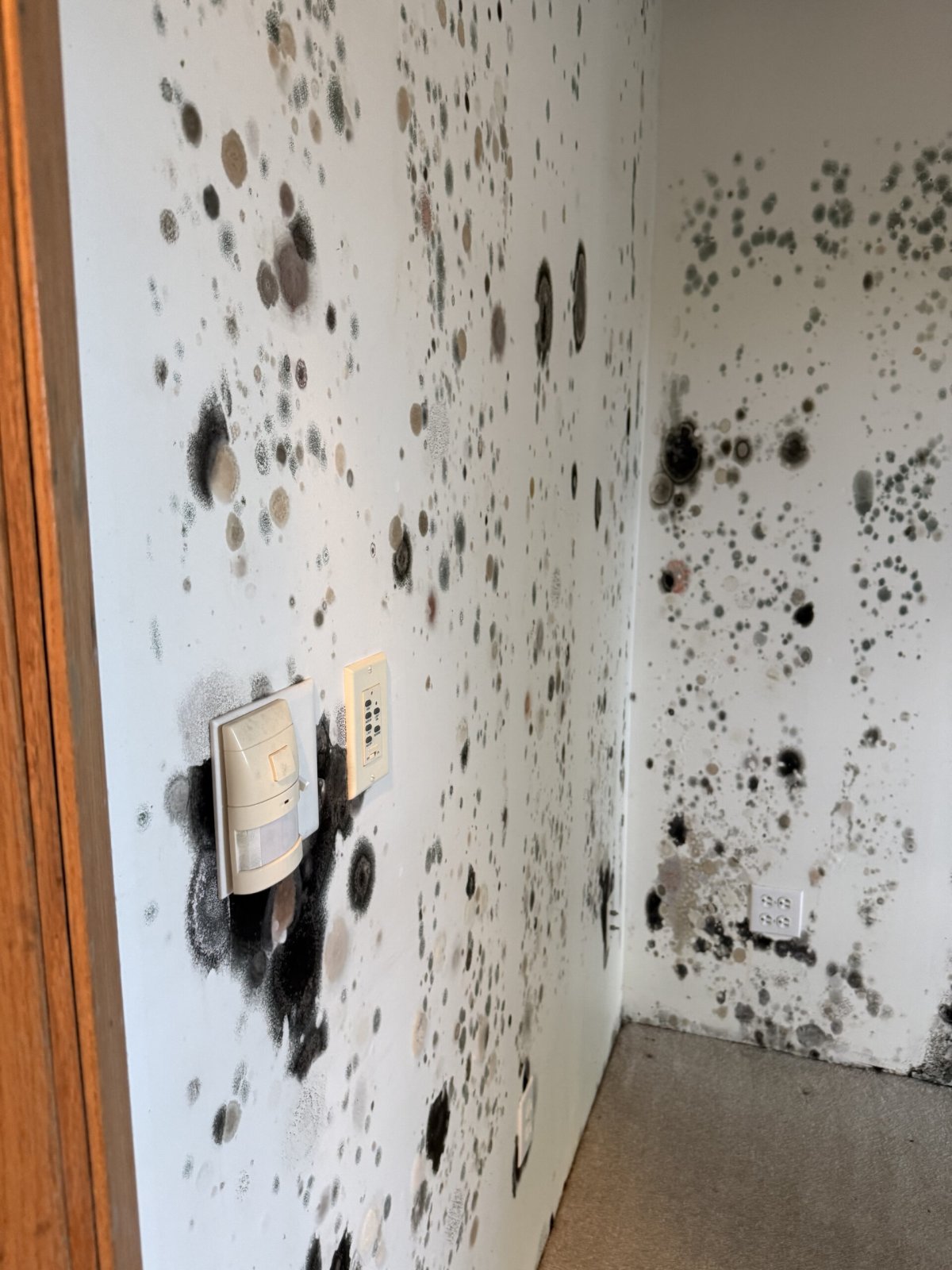
The clearest sign of hidden mold is a musty, earthy smell that does not go away after cleaning. That smell means spores are active somewhere you cannot see.
Other warning signs of mold behind drywall include:
- Water stains or discoloration on walls and ceilings
- Paint or wallpaper that bubbles, peels, or flakes
- Soft or crumbling drywall when you press on it
- Warped baseboards or buckling flooring
- A persistent cough or irritation that improves when you leave the house
- Visible dark speckling near outlets, vents, or window frames
Mold needs moisture, and in a Minnesota home that moisture usually comes from a burst pipe, an appliance failure, a roof leak, or condensation from poor ventilation. If you had water intrusion recently, assume mold is possible until an inspection proves otherwise.
Watch out: do not poke around inside a wall to check. For a deeper look at spotting growth early, read how to spot hidden mold growth before it spreads.
What to Expect During a Professional Mold Inspection
A professional mold inspection generally starts with a visual walkthrough and moisture readings, then moves to air or surface sampling if hidden growth is suspected. A good inspector should explain findings as they go.
Here is what a thorough inspection generally involves:
- Interview and history. The inspector asks when the water event happened and what was dried.
- Visual survey. Every room, plus the attic, crawlspace, and basement, gets checked for staining, warping, and visible growth.
- Moisture mapping. Moisture readings help locate wet materials behind walls and under floors.
- Air and surface sampling. Samples may be sent to a lab to confirm the type and concentration of mold.
- Written findings. A good report documents the moisture source and a recommended remediation scope.
A certified inspector will also tell you what does not need remediation. That honesty is a good sign. If a company recommends tearing out walls before any testing, ask why.
The man is American.
Hire Professional Mold Remediation Services Cost: What Drives Your Estimate
The cost to hire professional mold remediation services depends on the size of the affected area, how deep the mold has spread, the materials involved, and whether the moisture source needs repair.
What drives your estimate:
- Square footage affected. A small bathroom patch generally costs far less than a full basement.
- Access and containment. Mold behind finished walls, under flooring, or in a crawlspace generally takes more labor and more containment work.
- Materials removed. Porous materials like drywall, insulation, and carpet usually cannot be saved and must be removed and disposed of, which adds labor and disposal cost.
- Moisture source repair. Fixing the leak or correcting the moisture source is part of a lasting remediation. If the source is not repaired, the remediation will not hold.
- Drying and verification. Structural drying can take several days, and post-remediation verification may be a separate line item.
- Emergency timing. After-hours calls may carry different rates, so ask about any fees.
Treat any range you hear as an estimate, not a guaranteed price. The only number that should bind is the one in a written scope of work you have reviewed and signed.
Ask for a written scope of work before you approve anything. For the sequence of work behind the estimate, see what happens before, during, and after remediation.
Watch out: a quote that is dramatically lower than the others may mean containment or verification has been left out of the scope, and those steps help keep mold from coming back.
Several factors shape what you will pay, and a written scope should break each stage out separately.
| Cost factor | What it covers | Note |
|---|---|---|
| Square footage affected | Size of the mold-affected area | Small bathroom patch costs far less than a full basement |
| Access and containment | Reaching mold behind finished walls, under flooring, crawlspaces | Generally takes more labor and containment work |
| Materials removed | Porous drywall, insulation, carpet that cannot be saved | Adds labor and disposal cost |
| Moisture source repair | Fixing the leak or correcting the moisture source | Without repair, remediation will not hold |
| Drying and verification | Structural drying and post-remediation verification | Drying can take several days; verification may be a separate line item |
| Emergency timing | After-hours calls | May carry different rates, so ask about fees |
How to Read Hire Professional Mold Remediation Services Reviews
Reviews tell you more about a company’s responsiveness and honesty than its equipment list. Read for patterns, not single stars. A company with fifty recent reviews that mention mold jobs specifically, on-time arrival, and clear pricing is a stronger signal than a five-star average built on carpet cleaning.
Use this checklist when vetting a provider:
- Are reviews recent and specific about mold jobs, not just carpet cleaning or water extraction?
- Do reviewers mention how quickly the crew arrived and whether the scope matched the final bill?
- Does the company respond to negative reviews with a real explanation rather than a template?
- Are there complaints about mold returning after remediation, and how did the company handle them?
- Do reviewers mention clear pricing and no surprise charges?
- Can the company show before-and-after documentation and post-remediation verification reports from past jobs?
Reviews are only half the vetting. Before you sign, verify the business side directly:
- Licensing and registration. Ask for the company’s business registration and any credentials that apply to the work. Confirm the business is legitimate and insured before work begins.
- Insurance. Request a certificate of insurance showing general liability and workers’ compensation. Call the insurer to confirm the policy is active and covers remediation work. If a crew member is injured on your property and the company is uninsured, the exposure can land on you.
- Certifications. Look for technicians certified by a recognized body such as the IICRC for water damage and mold work, and ask whether the firm follows a published remediation standard. Certification is not a guarantee, but it indicates training in water damage and mold work.
- Written scope and contract. The scope should name the affected areas, the removal methods, the drying plan, the verification method, and the payment schedule. Get it in writing before work starts, and do not accept a verbal scope.
- References. Ask for two or three recent mold jobs in the Prior Lake area and call them. Ask specifically whether the mold came back and whether the final price matched the estimate.
- Independent reviews. Cross-check any company testimonials against independent review sites, and look for a pattern of complaints rather than a single bad review.
A common mistake is choosing the cheapest quote without checking certification or insurance. Mold work involves protective equipment, containment, and proper disposal, and cutting corners there is how problems come back. For more on vetting emergency providers, see these tips for hiring an emergency restoration company.
Watch out: a company that cannot produce a certificate of insurance or a written scope before asking for a deposit is a company to walk away from, no matter how good its reviews look.
Request Emergency Mold Help in Prior Lake
If you can smell mold, see staining, or had water sitting for more than a day, the safest move is to call for help now rather than wait. Mold spreads quickly, and the longer it sits, the more materials have to be removed.
SOS Cleaning & Restoration offers 24/7 emergency response in Prior Lake. Our IICRC certified team handles mold remediation and water damage mitigation. If you are dealing with a burst pipe at 2 AM, call us for emergency help.
Remediation work generally starts with finding the moisture source and containing the affected area, followed by removal, drying, and verification so the problem does not return.
Mold does not wait, and neither should you. If you are dealing with visible growth or a recent water event in Prior Lake, get a certified team on site before the damage spreads.
Frequently Asked Questions
How much does professional mold remediation cost?
Costs depend on the size of the affected area, how far mold has spread, the materials involved, and whether water damage needs to be addressed first. Small, contained areas cost less than large or hidden contamination. Because every property is different, an on-site assessment and written estimate are typically part of the process before work begins. Ask for a breakdown of labor, containment, equipment, and disposal so you can compare quotes fairly and avoid surprises.
Is there a difference between mold removal and mold remediation?
Yes. Mold removal often refers to cleaning visible mold from surfaces, while mold remediation is a broader process that includes finding the moisture source, containing the area, removing contaminated materials, drying the structure, and verifying the work. Remediation aims to prevent recurrence, not just make the mold disappear. When you hire professional mold remediation services, you should expect a documented process that addresses both the mold and the conditions that let it grow.
When should I hire a professional for mold remediation?
Call a professional when mold covers more than a small patch, when it returns after cleaning, when you smell a musty odor without seeing mold, or when anyone in the home has respiratory symptoms. Hidden mold behind drywall, under flooring, or inside HVAC systems is difficult to find and remove safely without professional equipment. If your property had recent water damage, a certified inspector can confirm whether mold has started growing before it spreads.
How do I choose a mold remediation company in Prior Lake, MN?
Look for IICRC certification, proof of insurance, and a clear written scope of work. Ask how they contain the area, whether they use air filtration and moisture meters, and if they perform post-remediation verification. Read reviews for patterns, not single complaints, and confirm they service your address. A locally owned team can be a good option for responsive service in your area.
