
Last Updated: October 28, 2026
Quick Summary
The fastest way to dry carpet after cleaning is to remove standing water first with a wet/dry vacuum or towel press, then move air across the surface with fans and pull humidity out of the room with a dehumidifier. Lifting the carpet and pad speeds drying when padding is soaked.
- Blot or extract standing water before blowing air, since airflow over a soaked carpet pushes water deeper.
- Point air movers at a low angle so air skims across the carpet surface.
- Run a dehumidifier to pull moisture out of the room instead of circulating damp air.
- Dry/low-moisture cleaning and encapsulation dry in a few hours, while steam cleaning takes several hours to a day.
- Low-moisture cleaning handles surface soil but won’t pull out deep-set dirt or pet accidents.
Table of Contents
- Why Fast Drying Matters After Carpet Cleaning
- How to Dry Carpet Fast After Cleaning: Step by Step
- Steam Cleaning vs. Dry Carpet Cleaning: Which Dries Faster?
- Low-Moisture Carpet Cleaning and When It Makes Sense
- Carpet Cleaning Dry Time: What to Expect by Method
- Common Mistakes That Slow Carpet Drying
- When to Call SOS Cleaning & Restoration for Wet Carpet
- Frequently Asked Questions
Why Fast Drying Matters After Carpet Cleaning
Wet carpet is a countdown clock. The longer moisture sits in the backing and pad, the more likely you are to trade a clean floor for a musty one. Fast drying carpet cleaning methods exist for one reason: mold and mildew need moisture to take hold, and the first day or two after cleaning is when that risk is highest.
Homes that dry quickly smell fresh. Homes that stay damp for days develop that sour, earthy odor nobody can ignore.
Here’s the uncomfortable truth most guides skip: the cleaning method matters less than what you do in the hours right after.
EPA guide on mold and moisture control is clear that controlling moisture is the first line of defense against indoor mold.
How to Dry Carpet Fast After Cleaning: Step by Step
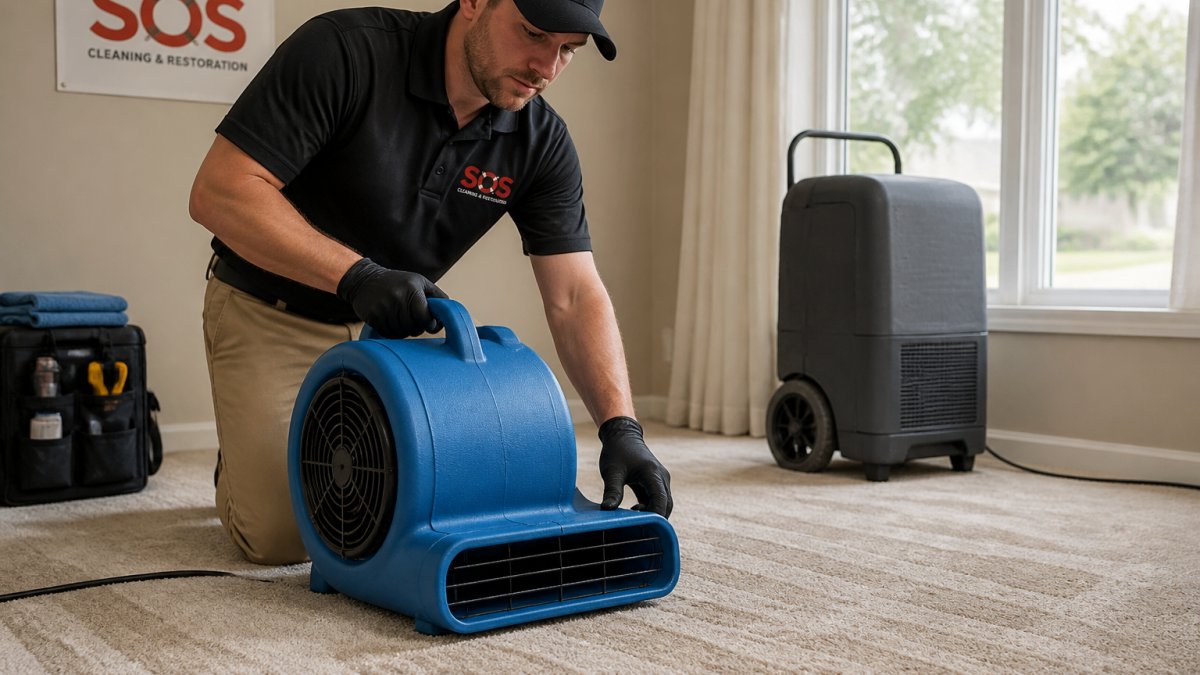
The fastest way to dry carpet after cleaning is to remove standing water, then move air and pull humidity out of the room.
Step 1: Pull Out Standing Moisture First
Blot or extract before you blow air around. Airflow over a soaked carpet just pushes surface water deeper. Use a wet/dry vacuum or a towel press to pull up as much water as possible. Press down hard and work in sections. This one step can cut drying time dramatically.
Step 2: Move Air and Lower Humidity
Air movers and fans do the heavy lifting. Point them at a low angle so air skims across the carpet surface. Open windows if the outside air is dry. Run a dehumidifier to pull moisture out of the room. Without it, you’re just circulating damp air.
Step 3: Lift the Carpet and Pad if Needed
For soaked padding or deep spills, lifting the carpet and separating the pad speeds drying and prevents hidden mold. This is a job for a pro when water has reached the subfloor. Homeowners can handle light surface moisture; deep saturation needs professional extraction.
Steam Cleaning vs. Dry Carpet Cleaning: Which Dries Faster?
| Method | Water Used | Typical Dry Time | Best For |
|---|---|---|---|
| Dry/low-moisture cleaning | Very little | A few hours | Quick refreshes, low-traffic rooms |
| Steam (hot water extraction) | More | Several hours to a day | Deep cleaning, pet stains, allergens |
| Encapsulation | Low | A few hours | Commercial spaces, fast turnaround |
Low-Moisture Carpet Cleaning and When It Makes Sense
But be honest about the limits. Low-moisture cleaning handles surface soil well. It won’t pull out deep-set dirt, pet accidents, or years of buildup the way hot water extraction can. Use it for maintenance, not rescue.
Carpet Cleaning Dry Time: What to Expect by Method
Carpet cleaning dry time depends on the method, the humidity, and the airflow you provide.
For a deeper breakdown of timing by method, see our guide on professional carpet cleaning drying time. It walks through what each approach leaves behind and how to plan around it.
A few things speed drying more than people expect:
Common Mistakes That Slow Carpet Drying
Other slow-drying culprits:
If you’re also dealing with set-in spots, our tips on getting common stains out of carpets help you treat them without adding more moisture.
When to Call SOS Cleaning & Restoration for Wet Carpet
That’s where SOS Cleaning & Restoration comes in. We’re locally owned in Prior Lake, MN, and IICRC certified, with 24/7 emergency response for water damage and mold concerns.
Wondering how often carpets actually need a deep clean? Our guide on how often to clean your carpet breaks down the schedule by household. And if water has already spread beyond the carpet, our page on fast water restoration explains why speed matters after a leak or flood.
Frequently Asked Questions
What is the fastest way to dry carpet after cleaning?
The fastest method combines three things: extracting as much water as possible, moving air across the surface, and pulling humidity out of the room. Run high-velocity air movers pointed at the carpet and a dehumidifier at the same time, and keep windows closed when outdoor humidity is high. Most carpets cleaned this way are dry within 4 to 8 hours. If the carpet is soaked from a leak or flood rather than a cleaning, call a restoration team instead of waiting it out.
Does low-moisture carpet cleaning dry faster than steam cleaning?
Yes. Low-moisture carpet cleaning uses far less water, so there is less to remove, and most low-moisture jobs are dry within 1 to 2 hours. Steam cleaning, also called hot water extraction, pushes water into the carpet and pad and typically needs 6 to 12 hours to dry. Low-moisture is a good fit for quick turnarounds and light soil, while steam cleaning reaches deeper into the fibers and pad for heavier soil and pet accidents.
How long does carpet take to dry after professional cleaning?
Carpet cleaning dry time depends on the method and the room.
Can I walk on carpet while it is drying?
You can walk on it lightly, but keep traffic to a minimum and wear clean socks or shoe covers. Heavy foot traffic pushes moisture deeper into the pad and slows drying. Keep furniture off the carpet until it is fully dry, or place plastic film or foam blocks under the legs. If the carpet still feels damp after 12 hours, increase airflow and run a dehumidifier, or call SOS Cleaning & Restoration to check for moisture trapped in the pad.
Wet carpet after cleaning doesn’t have to mean days of damp floors and worry. If your carpet is still holding moisture, or you’re not sure what’s hiding underneath, don’t wait for the smell to tell you. SOS Cleaning & Restoration offers 24/7 emergency response, IICRC-certified experts, and fast, dependable drying and restoration for homes and businesses around Prior Lake. Get started with SOS Cleaning & Restoration and get your carpet dry, clean, and safe again.
