
Last Updated: October 25, 2026
Quick Summary
Hidden mold after flooding can start growing within 24 to 48 hours of water exposure and spreads silently behind walls, under floors, and inside crawl spaces where you cannot see it. Signs include musty smells, discoloration on walls, soft drywall, peeling paint, water stains, and warped walls that indicate mold is actively feeding on your home’s structure.
- Mold begins to grow within 24 hours on wet materials and becomes visible by 48 hours after flooding.
- The critical window to prevent hidden mold growth is roughly 48 to 72 hours after flooding occurs.
- Check basements, crawl spaces, walls up to 3-4 feet high, closets, behind appliances, attics, and around windows and doors.
- Call a professional if flooding was extensive, water touched insulation or framing, you smell strong musty odors, or more than 72 hours have passed.
- Professional mold remediation includes complete removal, treatment of surfaces, proper disposal of contaminated materials, and complete drying of affected areas.
Table of Contents
- Why Hidden Mold After Flooding Is Dangerous
- Signs of Mold Behind Drywall and Inside Walls
- How Soon Mold Grows After a Flood
- Where to Check for Mold After Flooding
- Conducting a Mold Inspection After Flood Damage
- When to Call a Professional vs. DIY Detection
- Getting Professional Mold Remediation Help Today
- Frequently Asked Questions
Why Hidden Mold After Flooding Is Dangerous
Hidden mold after flooding is one of the most serious threats to your home after water damage. You can’t see it, which makes it deadly.
Mold grows fast in wet environments. It can start spreading within 24 to 48 hours of water exposure. By the time you notice a smell or visible growth, the problem is already large.
The real danger is what happens inside your walls. Mold behind drywall feeds on wood framing, insulation, and drywall itself. It destroys the structure of your home. It also releases spores into the air you breathe, which can trigger respiratory issues, allergies, and asthma attacks.
At SOS Cleaning & Restoration, we respond to flood emergencies in Prior Lake and the surrounding area. Catching mold early can help homeowners avoid significant structural repairs.
Hidden mold also spreads silently. It doesn’t announce itself. You might think the water damage is handled, but mold is already growing behind the walls, under the floors, and inside the crawl space. This is why professional detection matters.
The key insight most homeowners miss: visible mold is the late-stage problem. By then, invisible mold has already colonized your home. Early detection saves your property and your health.
Signs of Mold Behind Drywall and Inside Walls
Mold behind drywall doesn’t show up on the surface right away. But there are warning signs you can spot.
Discoloration on walls is one of the first clues. Look for dark stains, black spots, or fuzzy patches on drywall, baseboards, or wood trim.
A musty smell is another key indicator. This earthy, damp odor means mold is actively growing somewhere nearby.
Soft or spongy drywall tells you the structure is compromised. Press gently on the wall.
Peeling paint or wallpaper happens when moisture builds up behind the surface. Paint bubbles and separates from the wall when mold and moisture are present underneath.
Water stains that don’t fade after drying are a red flag. These marks show where water sat and where mold is likely growing now.
Warped or buckled walls mean serious water damage has occurred. The drywall is absorbing moisture and swelling. Mold thrives in this environment.
Visible mold on baseboards or trim is the most obvious sign. If you see it on the outside, assume there’s more hidden inside the wall cavity behind it.
The challenge is that signs of mold behind drywall can be subtle at first. A faint smell. A slight discoloration. These small warnings are your window to act before the problem becomes catastrophic.
How Soon Mold Grows After a Flood
Mold doesn’t wait. It moves fast.
Mold spores are everywhere in the air. When water damage occurs, those spores land on wet surfaces and start to germinate. The timeline is shorter than most people think.
Within 24 hours, mold begins to grow on wet materials. Drywall, insulation, wood, and carpet all become breeding grounds. The mold is microscopic at this stage, but it’s multiplying.
By 48 hours, visible mold may start to appear. You might see small dark spots or a fuzzy coating on wet surfaces. This is the critical window. If you act now, you can stop it.
After 72 hours, mold has established itself. It’s spreading deeper into materials. It’s harder to stop and costs more to remediate.
After one week, mold has penetrated into wall cavities, under flooring, and into insulation. Structural damage begins. The cost of remediation jumps significantly.
This is why how soon mold grows after a flood matters so much. Every hour counts. The faster you dry out your home and remove wet materials, the better your chances of preventing serious mold growth.
Many homeowners think they have time. They don’t. Mold doesn’t care about your schedule. It grows while you’re deciding what to do.
The window to prevent hidden mold growth is roughly 48 to 72 hours after flooding. After that, remediation becomes much more complex and expensive.
Where to Check for Mold After Flooding
Mold hides in specific places after flooding. Knowing where to check for mold after flooding saves you from missing dangerous growth.
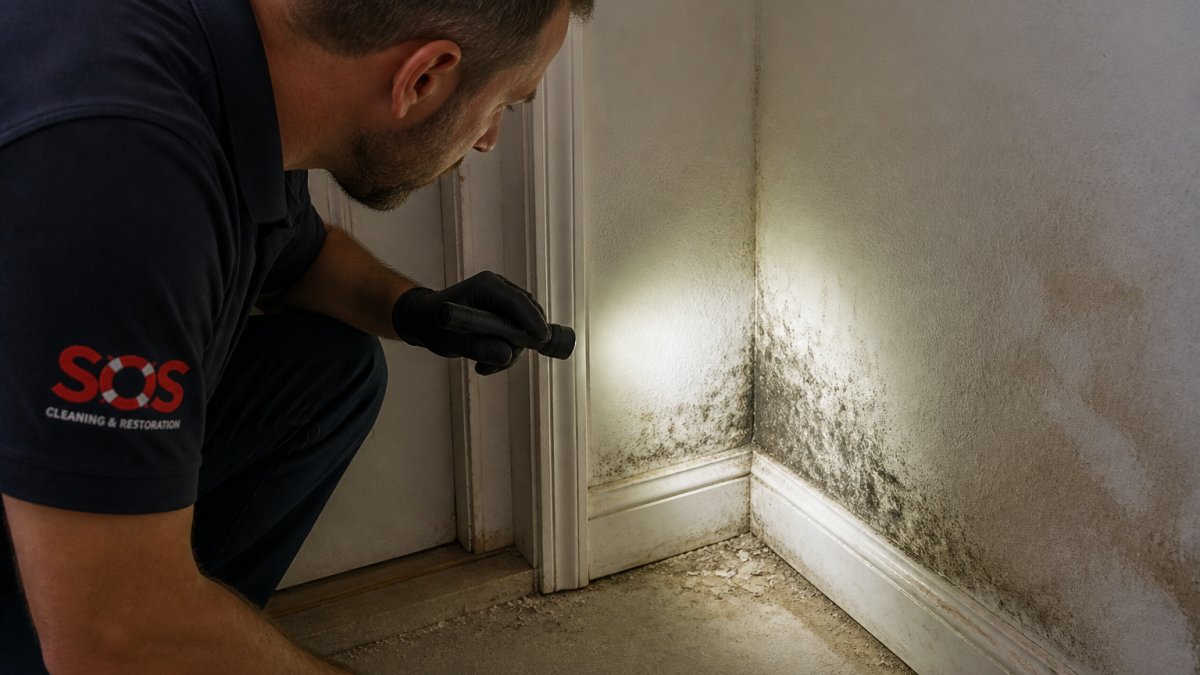
Check the basement first. Basements flood easily and dry slowly. Mold loves basements. Look at:
- Corners where water pooled
- The base of walls
- Around the foundation where water seeps in
- Under the stairs
- Behind stored items
Inspect crawl spaces and under-floor areas. Water runs downward and collects underneath. These spaces stay damp for weeks. Mold thrives here.
Look at walls from the floor up. Water doesn’t rise evenly. It soaks into drywall and climbs higher than you’d expect.
Examine closets and enclosed spaces. Small rooms trap moisture. Air doesn’t circulate well. Mold grows fast in closets, under stairs, and inside cabinets.
Check behind appliances. Washing machines, water heaters, and HVAC systems are near water sources. Water damage here spreads quickly into surrounding walls.
Inspect attic spaces. If water came from above or if your roof leaked during the flood, mold can grow in the attic.
Look at windows and doors. Water enters around frames. Mold grows on the sill, on the frame, and inside the wall cavity around the opening.
Check air vents and ductwork. Mold spores travel through ventilation.
Examine wood framing. If drywall is removed or damaged, look at the wood studs, plates, and joists. Mold on wood is serious. It weakens the structure.
The key is systematic checking. Don’t just look at visible surfaces. Get a flashlight and inspect dark corners, hidden spaces, and areas that stay damp longer.
Conducting a Mold Inspection After Flood Damage
A mold inspection after flood damage requires a methodical approach. You’re looking for both visible and hidden growth.
Start with your senses. Smell the air in each room. Mold has a distinctive musty odor.
Use a flashlight. Mold hides in shadows. A bright light reveals discoloration, fuzzy growth, and staining that you’d miss in normal lighting.
Press on damp materials. Gently push on drywall, insulation, and wood. Soft, spongy, or weak spots indicate water damage and mold growth.
Take photos. Document what you find. Photos create a record of the damage and help professionals understand the scope of the problem.
Check humidity levels. High humidity means moisture is still present. Mold needs moisture to grow.
Look for water stains. Even after surfaces dry, water stains remain. These show where water was and where mold is likely growing now.
Inspect insulation. Wet insulation doesn’t dry well. It stays damp inside walls. Mold grows throughout wet insulation.
Document the waterline. The highest point water reached shows how far water penetrated. Mold can grow above and below this line.
Note the timeline. When did the flooding occur? How long ago? This helps determine how far mold has likely spread.
A thorough inspection takes time. Don’t rush it.
When to Call a Professional vs. DIY Detection
Knowing when to stop detecting and start calling for help is critical.
DIY detection works if:
- The flooding was minor and contained to one small area
- You’ve dried everything within 48 hours
- You see no visible mold growth
- The smell is faint or gone
- You have basic tools (flashlight, moisture meter)
Call a professional if:
- The flooding was extensive or involved multiple rooms
- Water touched insulation, drywall, or wood framing
- You smell a strong musty odor
- You see any visible mold growth
- More than 72 hours have passed since the water damage
- You’re unsure whether you’ve found all the mold
- The water came from sewage, contaminated sources, or the outdoors
Professional mold inspection uses tools you don’t have at home. Moisture meters detect hidden water inside walls. Thermal imaging cameras show temperature differences that reveal wet spots. Air quality testing identifies mold spores in the air.
The EPA provides guidance on mold assessment and remediation for homeowners and professionals.
Most importantly, professionals know what they’re looking for. They’ve seen hundreds of flood cases. They know where mold hides. They know what questions to ask.
If you’re in Prior Lake or the surrounding area and you’re unsure about what you’ve found, we can help you determine next steps.
Getting Professional Mold Remediation Help Today
If you’ve found mold or suspect it’s hiding in your walls, professional remediation is the safest choice.
What professional remediation includes:
- Complete mold removal from all affected areas
- Removal of contaminated materials (drywall, insulation, carpet)
- Treatment of surfaces to prevent regrowth
- Proper disposal of moldy materials
- Restoration of damaged areas
The remediation process typically involves:
- Isolating the affected area to prevent spores from spreading
- Removing wet and moldy materials
- Cleaning and treating remaining surfaces
- Drying the space completely
- Restoring walls, flooring, and other damaged components
Professional teams have the equipment and expertise to handle mold safely. They wear protective gear. They use industrial-grade drying equipment. They know how to prevent the mold spores from contaminating other parts of your home.
SOS Cleaning & Restoration provides mold remediation services for homes and businesses in Prior Lake and the surrounding area. Our certified restoration experts have the training and equipment to handle mold removal safely and completely. We work 24/7 to respond to emergencies.
The key is acting fast. The longer you wait, the more mold spreads and the more damage it causes. If you’ve experienced flooding and you’re concerned about hidden mold growth, don’t wait to investigate further.
The CDC provides recommendations for mold cleanup after flooding to help you understand the health risks and proper cleanup procedures.
Flooding creates a race against time. Mold doesn’t wait for you to decide what to do. We’ll identify the mold, remove it safely, and restore your home to a safe condition. Request Emergency Help today, the sooner you act, the better the outcome.
| Detection Method | Best For | Time Required | Cost |
|---|---|---|---|
| Visual inspection | Small, obvious mold | 30-60 minutes | Free |
| Moisture meter | Finding hidden water | 1-2 hours | $20-50 meter |
| Professional inspection | Comprehensive assessment | 2-4 hours | Varies by company |
| Air quality testing | Spore levels in home | 1-2 hours | $300-800 |
| Thermal imaging | Hidden moisture in walls | 1-2 hours | $200-600 |
IICRC standards for mold remediation outline the professional best practices for safe and effective mold removal. Preventing Mold After Water Damage: A Step-by-Step Guide provides detailed prevention strategies you can implement immediately after water damage occurs.
Frequently Asked Questions
What are the first signs of hidden mold after flooding?
Hidden mold often appears as dark spots, discoloration, or fuzzy growth on surfaces. Early signs include musty odors, water stains that don’t dry, soft or warped drywall, and peeling paint or wallpaper. These indicators suggest moisture is trapped inside walls or under flooring where mold thrives. If you notice any of these after a flood, inspect immediately or contact a professional.
How soon can mold grow after a flood?
Mold can begin growing within 24 to 48 hours of water exposure in the right conditions. Warm, humid environments speed this process significantly. This is why rapid water extraction and drying are critical after flooding. Hidden mold inside walls or under carpets may develop even faster because moisture remains trapped and unnoticed. Acting quickly prevents extensive mold colonization.
Can I safely inspect for hidden mold after a flood myself?
Basic visual inspection is safe, but identifying hidden mold behind drywall, in HVAC systems, or under flooring requires professional equipment and expertise. A professional mold inspection uses moisture meters, thermal imaging, and air quality testing to detect mold you cannot see. If you suspect extensive hidden mold, professional assessment protects your health and ensures complete remediation rather than leaving pockets of contamination.
Where should I look for hidden mold after water damage?
Check baseboards, wall cavities, crawl spaces, attic areas, under carpeting, around window frames, and inside HVAC ducts. Mold thrives in hidden, damp spaces where air circulation is poor. Pay special attention to areas that were submerged or experienced prolonged moisture. Use a flashlight to inspect dark corners, and look for discoloration, soft spots, or musty smells as warning signs of hidden mold growth.
