
Table of Contents
- How Quickly Mold Grows After Water Damage
- Water Damage Cleanup Steps to Start Right Now
- How to Dry Out a House After Water Damage
- Preventing Mold in Hidden Spaces: Walls, Crawlspaces, and HVAC
- When to Call a Water Damage Restoration Company
- Preventing Mold After Water Damage: What to Do in the First 48 Hours
- Conclusion
- Frequently Asked Questions
Last Updated: October 18, 2026
How Quickly Mold Grows After Water Damage
Mold can start growing within 24 to 48 hours after water damage, and it can spread across a damp surface in under a week. That short window is why preventing mold after water damage comes down to what you do in the first day or two, not the first month.
Here in Prior Lake, MN, we see this play out every spring and summer. Snowmelt seeps into basements. Summer storms push water under siding. A supply line bursts while you’re at work.
Mold only needs three things to take hold:
- Moisture (any surface that stays damp)
- A food source (drywall paper, wood, dust, carpet backing)
- Warmth (a normal indoor temperature is plenty)
Remove the moisture and you remove the problem. The EPA guide to mold and moisture control puts it simply: control moisture and you control mold. Everything in this guide from SOS Cleaning & Restoration points back to that one idea.
Water Damage Cleanup Steps to Start Right Now
The first hour matters more than anything else you’ll do. Start by shutting off the water source if it’s still running, then cut the power to any flooded area before you step into it.
Here are the water damage cleanup steps to take immediately:
- Stop the source. Close the main valve or the supply valve feeding the leak.
- Kill the power to wet rooms at the breaker.
- Document everything with photos before you touch a thing. Your insurer will want them.
- Pull up wet rugs and move furniture off damp carpet.
- Remove standing water with a wet/dry vacuum or towels.
- Get air moving right away with fans and open windows if the weather allows.
One mistake we see often: people crank the heat to “dry things out.” That’s backwards. Heat feeds mold growth. You want airflow and dehumidification, not warmth.
Never leave wet drywall, insulation, or carpet sitting for more than a day or two. Once mold takes hold inside a wall cavity, cleanup turns into a demolition and remediation job. That’s a much bigger bill than drying it out early.
How to Dry Out a House After Water Damage
Drying a house after water damage means removing moisture from the air and the materials at the same time. Fans alone won’t do it. You need airflow plus dehumidification, running together for several days.
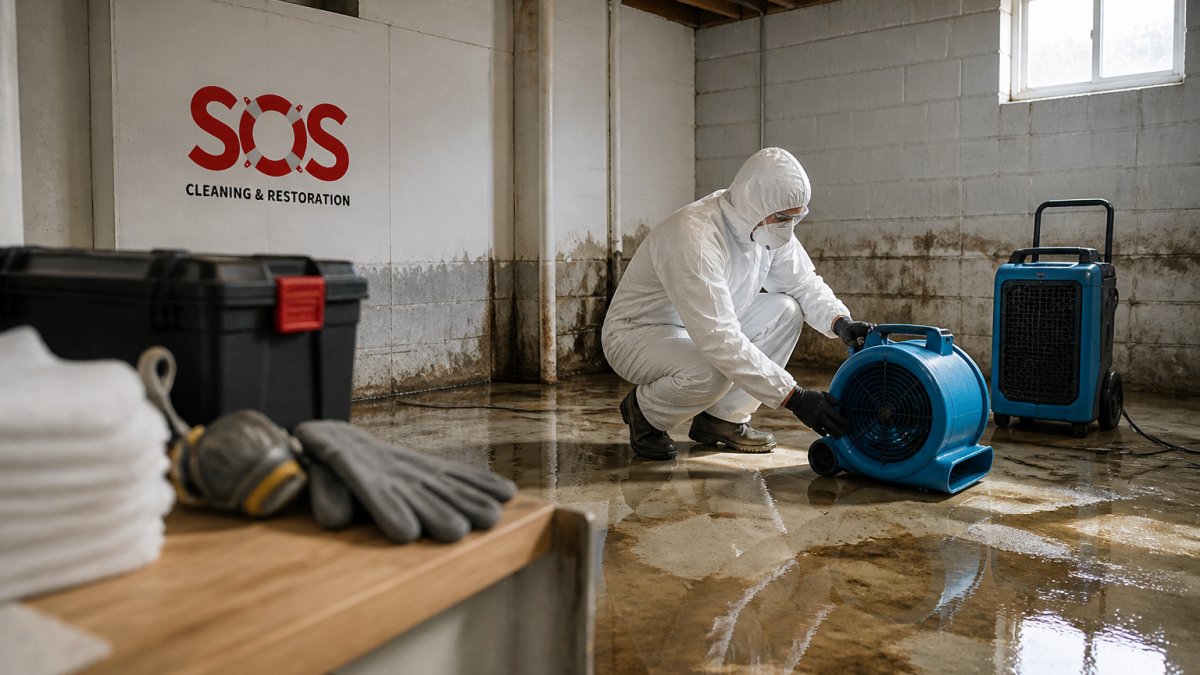
Here’s how to dry out a house after water damage the way the pros do it:
- Set up air movers to push air across wet surfaces, not just into the room.
- Run dehumidifiers to pull moisture out of the air. Without this, fans just move damp air around.
- Open interior doors and cabinets so air reaches every space.
- Pull baseboards along wet walls to let cavities breathe.
- Check materials daily with a moisture meter. Drywall and wood feel dry long before they are dry.
Most homes need three to five days of active drying. Carpet that stays damp for days is a mold risk underneath, which is why our drying process uses moisture readings instead of guesswork.
Preventing Mold in Hidden Spaces: Walls, Crawlspaces, and HVAC
The mold you can see is rarely the whole story. Hidden spaces hold moisture longer, and that’s where preventing mold pays off most.
Walls. Water wicks up drywall and sits inside the cavity. If the drywall is wet past the paper on the back, it usually has to come out. Better to remove a strip now than gut a room later.
Crawlspaces. These trap humid air and stay damp long after the flood is gone. A vapor barrier and a dehumidifier make a real difference.
HVAC systems. If water reached your ductwork or air handler, running the system spreads spores through the whole house. Have the system checked before you turn it back on.
A common mistake is trusting your nose. Mold can grow behind a wall with no smell at all until it’s advanced. A moisture meter and a careful look behind baseboards tell you far more than smell ever will.
When to Call a Water Damage Restoration Company
Call a water damage restoration company when water has been sitting for more than a day, when it’s contaminated (sewage or gray water), or when it has reached inside walls, ceilings, or flooring. Those are the situations where DIY drying usually falls short.
Call right away if:
- The water came from a toilet, sewer line, or outdoor flooding
- You can’t find the source or stop the leak
- More than one room is affected
- You see or smell mold already
- Anyone in the home has asthma or a weakened immune system
At SOS Cleaning & Restoration, our IICRC-certified team handles water damage mitigation and mold mitigation across Prior Lake and the surrounding area. We’re locally owned, and we answer the phone around the clock because water doesn’t wait for business hours.
What most people don’t realize: a restoration company isn’t just faster. We use moisture meters and thermal imaging to find water you can’t see, which is the difference between a dry house and a mold problem six weeks from now.
Ask any restoration company for their IICRC certification and a written drying plan with moisture readings. A crew that can’t show you either is guessing.
Preventing Mold After Water Damage: What to Do in the First 48 Hours
Preventing mold after water damage comes down to a tight timeline. Here’s the 48-hour checklist we’d hand any homeowner in Prior Lake, MN.
| Timeframe | Action | Why It Matters |
|---|---|---|
| 0-2 hours | Stop water, cut power, take photos | Limits damage and supports your claim |
| 2-6 hours | Remove standing water, pull wet items | Cuts the moisture mold needs |
| 6-24 hours | Set up fans and dehumidifiers | Starts the drying process fast |
| 24-48 hours | Check moisture readings, call a pro if needed | Catches hidden moisture early |
If you’re searching for “mold prevention help near me” after a leak, don’t wait to see if it dries on its own. The CDC guidance on mold cleanup is clear that damp materials should be dried within 24 to 48 hours to prevent mold growth.
Conclusion
Water damage is stressful, and the mold that follows can turn a weekend problem into a months-long project. The good news is that the fix is mostly about speed and moisture control.
If water has been sitting, or you’re not sure your home is truly dry, don’t gamble on it. SOS Cleaning & Restoration offers 24/7 emergency response, IICRC-certified experts, and fast local service for water damage remediation and mold remediation in Prior Lake and the Twin Cities metro. Get started with SOS Cleaning & Restoration and protect your home before mold gets a foothold.
Frequently Asked Questions
How quickly can mold grow after water damage?
Mold can begin to grow within 24 to 48 hours after water damage, especially in warm, humid conditions. Spores are already present in most homes and only need moisture to activate. Porous materials like drywall, carpet, and insulation are particularly vulnerable. The key to preventing mold is to start drying within the first day and to keep indoor humidity below 60 percent. If water sat for more than two days, assume mold has started and act accordingly.
What should I do immediately after water damage to prevent mold?
First, shut off the water source and electricity to affected areas if safe. Then remove standing water with a wet/dry vacuum or pump, move wet furniture and belongings out, and set up fans and dehumidifiers. Open windows if outdoor humidity is low. Pull up wet carpet and padding if soaked. Within 24 hours, call a professional if the area is larger than a few square feet or involves sewage. These water damage cleanup steps reduce the chance of mold growth.
Can I prevent mold after water damage myself?
You can handle small, clean-water spills on non-porous surfaces yourself by drying thoroughly within 24 to 48 hours. However, mold prevention becomes difficult with larger areas, hidden moisture, or contaminated water. If the water damage covers more than about 10 square feet, involves drywall or insulation, or came from a sewer or appliance leak, professional help is safer. Restoration experts use moisture meters and thermal imaging to find hidden water and ensure complete drying, which is critical for preventing mold.
When should I call a water damage restoration company?
Call a restoration company immediately if water has entered walls, ceilings, or floors, if the affected area is larger than a few square feet, or if the water is from a sewage backup or flood. Also call if you cannot dry the area within 24 to 48 hours or if you see or smell mold. Professionals have the equipment to extract water, dry structures quickly, and apply antimicrobial treatments. In Prior Lake and the Twin Cities metro, SOS Cleaning & Restoration offers 24/7 emergency response with IICRC-certified technicians.