
Last Updated: November 12, 2026
Quick Summary
Professional upholstery cleaning for allergies loosens allergens bonded to fabric fibers, flushes them out, and dries the piece fast so dust mites, pet dander, and pollen are reduced. Cleaning lowers the allergen load but does not eliminate allergens from your home or remove their source.
- Check the care tag first: W allows water-based cleaning, S means solvent only, and WS allows either.
- Vacuum every surface, including under cushions and along seams where dander collects.
- Dry fast with fans or a dehumidifier, prop cushions, and keep the piece away from walls.
- Cleaning reduces allergens in upholstery but does not remove their source from the home.
- Ask whether a quote includes pre-treatment, rinse, and drying setup before comparing prices.
Table of Contents
- Why Allergens Settle Into Upholstered Furniture
- How to Remove Allergens From Upholstery: A Step-by-Step Guide
- Pet Dander Removal From Furniture: What Actually Works
- Choosing a Cleaning Method by Fabric and Care Label
- Upholstery Cleaning Cost: What Drives the Price
- Upholstery Drying Time and Preventing Moisture Problems
- What an Allergy-Aware Cleaning Appointment Involves in Prior Lake
- Book a Professional Upholstery Cleaning for Your Home
- Frequently Asked Questions
Why Allergens Settle Into Upholstered Furniture
Your sofa is a trap, and it catches everything you bring home. Every time you sit down, you shed skin cells, hair, and whatever pollen drifted in through the window. Those particles sink into the fabric and stay there.
Professional upholstery cleaning for allergies targets that trapped material directly. Closed-up winters and humid summers both push people indoors and let allergen loads build. The American Lung Association guidance on indoor air quality notes that furnishings act as reservoirs, releasing particles back into the air whenever someone sits or walks past.
Three things collect in upholstery faster than anywhere else in a room:
- Dust mites feed on shed skin and thrive in fabric that holds a little moisture.
- Pet dander is light and sticky, so it clings to weave and padding rather than falling to the floor.
- Pollen and mold spores ride in on clothing and settle into cushions, especially in humid months.
A vacuum picks up what sits on the surface. The padding underneath holds the rest, and that is the part that keeps bothering you.
How to Remove Allergens From Upholstery: A Step-by-Step Guide
Removing allergens from upholstery means loosening what is bonded to the fibers, flushing it out, and drying the piece fast. Skip any of those three and the allergens come back or the fabric stays damp. Here is the process we follow, plus the aftercare steps most guides leave out.
Step 1: Inspect the Fabric and Care Label
Read the care tag before anything touches the fabric. A “W” code means water-based cleaning is safe, “S” means solvent only, and “WS” allows either. Many blends and rayons fall apart with the wrong solution, so check first and test a hidden patch. If the tag is missing or unreadable, treat the piece as moisture-sensitive until a professional confirms otherwise.
Step 2: Vacuum, Pre-Treat, and Agitate
Vacuum every surface, including under the cushions and along the seams where dander collects.
Step 3: Extract, Rinse, and Dry
Drying is not a passive step, run fans or a dehumidifier, prop cushions so air reaches both sides, and keep the piece away from walls until fully dry. Most practitioners find a sofa dries in several hours with strong airflow and much longer in a closed, humid room.
Step 4: Aftercare Between Professional Cleanings
Keep pets off the furniture where possible, or use a washable throw as a barrier that can be laundered often.
What Cleaning Can and Cannot Do for Allergies
It helps to be realistic. Professional cleaning can help reduce allergens in upholstery, but it does not eliminate allergens from a home or remove their source. Think of a deep clean as resetting the piece and lowering the allergen load, with maintenance in between to keep it down. If symptoms persist after cleaning, the cause may extend beyond upholstery to carpet, bedding, or HVAC filtration, which is worth discussing with an allergist.
Pet Dander Removal From Furniture: What Actually Works
Pet dander removal from furniture works best when you attack the source and the fabric at the same time.
What helps:
- Keep pets off the furniture where possible, or use a washable throw as a barrier.
- Book professional upholstery cleaning for the cushions and frame.
If accidents or odor come with the dander, our pet stain and odor removal service handles both the residue and the smell at the source.
Choosing a Cleaning Method by Fabric and Care Label
Match the method to the fabric, not the other way around. The wrong method can shrink, bleed, or watermark a piece that was perfectly cleanable.
| Fabric Type | Recommended Method | Watch Out For |
|---|---|---|
| Cotton and durable blends | Hot water extraction | Over-wetting the padding |
| Delicate weaves and rayon | Low-moisture or solvent | Water marks and shrinkage |
| Leather and vinyl | pH-balanced wipe-down | Harsh chemicals drying the finish |
| Wool and natural fibers | Gentle low-moisture clean | Agitation that fuzzes the surface |
Upholstery Cleaning Cost: What Drives the Price
Upholstery cleaning cost depends on the piece, the fabric, and how much soil it holds, so no honest cleaner quotes a flat number before seeing the furniture. A single chair takes far less time than a sectional with deep-set stains. Rather than publish a number that will not fit your couch, here is how to read a quote and compare providers fairly.
What moves the price:
- Size and number of pieces, from a single armchair to a full sectional
- Fabric type, since delicate weaves need slower, gentler methods
- Condition, including pet accidents, odor, or heavy staining
- Add-ons like stain protection or odor treatment
- Access and setup, such as stairs or tight rooms that slow the job
Ask what the quote covers and whether the price includes pre-treatment, rinse, and drying setup, a low quote that excludes those steps is not a real comparison.
When you compare estimates, ask these questions:
- Is the price per piece or per room, and does it include cushions and the frame?
- Which method will be used for your fabric, and is the technician certified to use it?
- Does the quote include pre-treatment, deodorizing, and drying equipment?
- Is there a written guarantee, and what does it cover if a stain or odor returns?
- Are the solutions pet-safe and low-residue for an allergy-sensitive household?
Upholstery Drying Time and Preventing Moisture Problems
A couch that stays damp can grow mold underneath, and that musty smell is hard to undo.
Speed drying with these steps:
- Open windows and run fans or a dehumidifier in the room.
- Keep cushions propped up so air reaches both sides.
- Avoid pushing the sofa against a wall until it is fully dry.
- Run the HVAC system to keep air moving.
If a piece still smells musty days later, that is a warning sign worth acting on. Our guide on how to stop carpets smelling after cleaning explains the causes, and persistent odor can point to mold that needs professional cleanup.
What an Allergy-Aware Cleaning Appointment Involves in Prior Lake
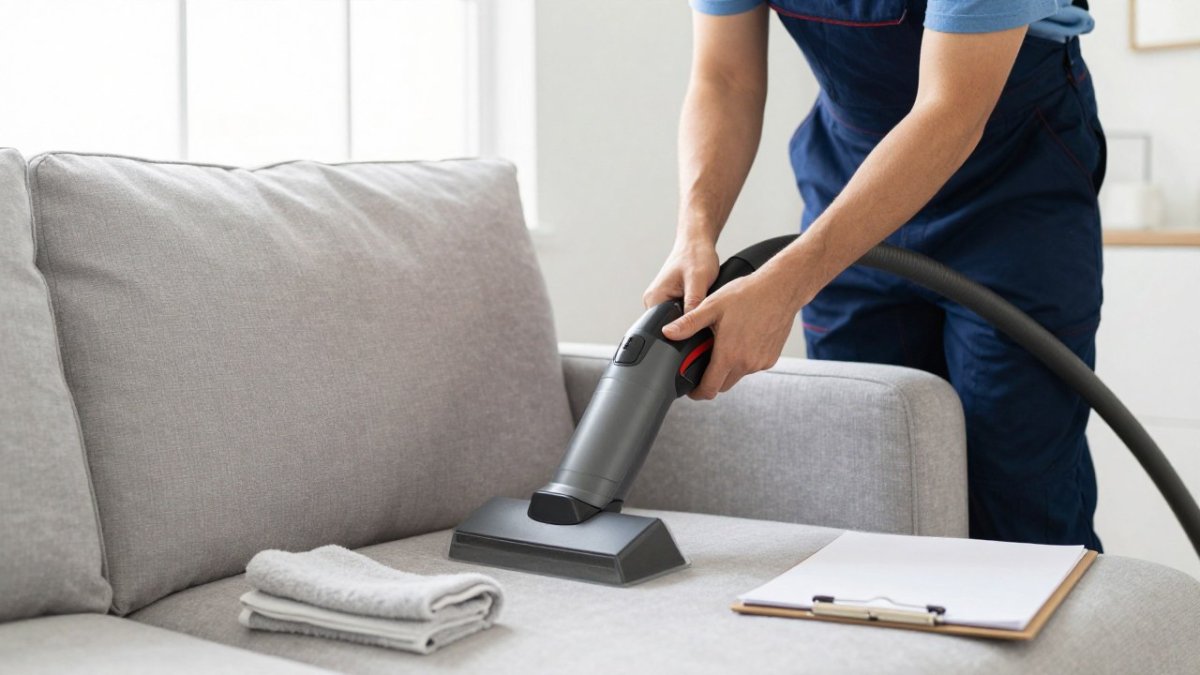
When you are searching for upholstery cleaning near me, ask three things: whether the team is certified, what method suits your fabric, and how they handle drying. SOS Cleaning & Restoration is IICRC certified and locally owned.
Book a Professional Upholstery Cleaning for Your Home
Dust mites, dander, and pollen build up faster than most people realize, and surface cleaning only reaches part of the problem. If your family deals with allergies or you have pets on the furniture, a professional deep clean resets the whole piece.
Our team is IICRC certified and locally owned. Contact us to request emergency help or to discuss your upholstery cleaning needs. You can review our frequently asked questions or explore the full upholstery cleaning service to see what a visit includes.
Don’t let trapped allergens keep your family uncomfortable in their own living room. SOS Cleaning & Restoration provides certified upholstery care, fast drying, and allergy-aware methods for homes across Prior Lake and the Twin Cities metro. Get started with SOS Cleaning & Restoration and breathe easier on furniture that is genuinely clean.
Frequently Asked Questions
Can professional upholstery cleaning remove dust mites and pet dander?
Yes. Dust mites and pet dander collect deep in sofa cushions, mattress seams, and fabric fibers where a household vacuum cannot reach. Results depend on fabric type and how long allergens have built up, so ask the technician what to expect for your specific furniture.
How often should upholstery be professionally cleaned if someone has allergies?
Most allergy-sensitive households benefit from professional upholstery cleaning every 6 to 12 months. Homes with pets, carpeted rooms, or a family member with asthma may need cleaning closer to every 6 months. Between visits, vacuum fabric weekly with a HEPA filter and wash removable covers according to the care label. Upholstery drying time after each visit is usually several hours, so plan around it.
How long does upholstery take to dry after professional cleaning?
If fabric stays damp longer than a day, call the cleaner back, because trapped moisture can lead to mold and odor.
Is professional upholstery cleaning worth it for people with allergies?
Upholstery cleaning cost varies by furniture size and fabric, so request a free estimate and ask what allergen reduction results the technician expects before booking.
