
Quick Summary
To stop mold after pipe burst problems, shut off the water right away, remove standing water, and pull back wet carpet and padding within the first 48 hours. Then run air movers and a dehumidifier, and verify with moisture readings that walls and subfloors are fully dry before sealing or painting.
- Mold can start within about 48 hours in wet, warm conditions.
- Shut off the main water valve first, then check for electrical hazards.
- Pull back carpet and cut out padding, since it can stay soaked for days.
- Run air movers and a dehumidifier, and close off the wet zone.
- Take moisture readings at 48 hours; do not seal or paint until dry.
Table of Contents
- Why Mold Starts So Fast After a Pipe Burst
- The First Hour: Stop the Water and Shut Off Power
- Removing Standing Water and Getting Air Moving in the First 48 Hours
- Checking Moisture Levels and Confirming the Area Is Dry
- What to Spray (and What Not to Spray) After Water Damage
- Finding Mold Hidden Behind Drywall and Under Flooring
- When to Call a Prior Lake Restoration Crew and Document Everything
- Frequently Asked Questions
Why Mold Starts So Fast After a Pipe Burst
Last Updated: November 10, 2026
If a pipe bursts in your Prior Lake home, mold after pipe burst can start growing within 24 to 48 hours. That is why the first steps matter so much. Emergency water damage is common in Prior Lake, and the same mistakes keep showing up. Most people focus on the visible water and miss the moisture that soaks into walls, carpet pads and subfloors.
Mold needs three things to grow: moisture, a food source and time (the EPA). Wet drywall, carpet, paper and wood provide all three. Once the moisture stays in those materials, spores that are already in the air settle and start to colonize.
A common mistake is waiting until the water looks gone. A floor can look dry while the carpet pad underneath is still soaked, and that hidden dampness is a frequent source of mold after pipe burst problems. The damp layer keeps growing mold long after the surface feels fine.
- Mold can start within about 48 hours in wet, warm conditions
- Porous materials like drywall, insulation and carpet pad hold water the longest
- Hidden moisture behind walls is the most common reason mold returns
The First Hour: Stop the Water and Shut Off Power
The first hour is about stopping the water and keeping everyone safe. Find the main water shutoff valve and close it. For a fuller step-by-step on handling Prior Lake water damage safely, see our Prior Lake water damage guide. If you can’t find it, call your water utility or a plumber right away.
Next, check for electrical hazards. If water reaches outlets, cords or the electrical panel, shut off power at the breaker only if you can do so safely. Do not step into standing water to reach a panel. When in doubt, call an electrician first.
Take these steps in the first hour:
- Shut off the main water valve or the valve to the broken line
- Turn off power to affected rooms if it is safe to do so
- Move valuables, furniture and electronics out of the water
- Take photos and video of the damage before you move anything
Watch out: Never run an appliance or extension cord through standing water. Electric shock is a serious risk.
Removing Standing Water and Getting Air Moving in the First 48 Hours
Mold risk is a clock, not a checklist. The first 48 hours are generally treated as the critical window, because spores already in household dust can colonize wet drywall, carpet pad and wood framing once moisture persists.
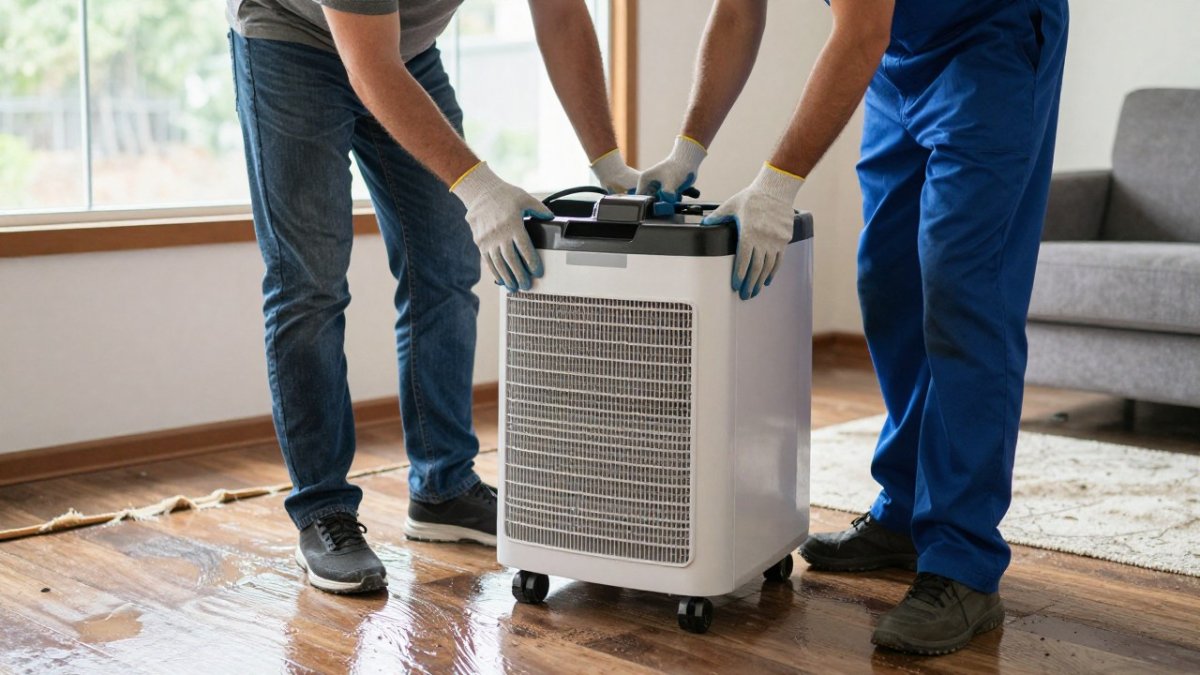
Hours 0-2: stop the source and remove standing water. After the main valve is closed, pull water out with a wet/dry vacuum or a transfer pump. A wet/dry vacuum is fine for shallow water on hard floors; a pump is faster when water is more than an inch deep or has spread across several rooms.
Hours 2-12: pull back wet carpet and padding. Carpet padding behaves like a sponge and can stay soaked for days even when the carpet surface feels dry. Pull the carpet back at the tack strip, cut out the padding, and bag it.
Hours 12-48: move air and dehumidify. Set up air movers so they blow across wet surfaces at a low angle, and run a dehumidifier sized for the room. Keep the area closed off from the rest of the house with plastic sheeting so you are drying one zone, not the whole home.
!A homeowner and a restoration technician in work gloves setting up a dehumidifier and air mover in a wet living room with the carpet pulled back
Watch out: Never run a wet/dry vacuum, fan, or extension cord through standing water, and do not plug drying equipment into a circuit that was submerged. Electric shock is a serious risk, and a GFCI-protected outlet is the minimum safe setup.
A simple first-48-hours checklist for a Prior Lake home:
- Hour 0: shut off the main valve; shut off power to wet rooms only if you can reach the panel without stepping in water
- Hour 1: photograph and video the damage before moving anything
- Hours 1-2: vacuum or pump standing water; squeegee the rest toward a drain
- Hours 2-12: pull back carpet, remove padding, move furniture and electronics off wet flooring
- Hours 12-48: set up air movers and a dehumidifier; close off the zone; keep equipment running
- Hour 48: take moisture readings and decide whether the structure is drying on schedule
If the water came from a supply line and you reach the drying stage within a few hours, most porous materials can be saved.
The drying timeline below breaks the first 48 hours into the steps the article describes.
| Window | Action | Detail |
|---|---|---|
| Hours 0-2 | Remove standing water | Wet/dry vacuum or pump |
| Hours 2-12 | Pull back carpet | Cut out and bag padding |
| Hours 12-48 | Move air and dehumidify | Air movers and dehumidifier |
| Hour 48 | Take moisture readings | Decide if drying is on schedule |
Checking Moisture Levels and Confirming the Area Is Dry
A room that feels dry is not always dry. The surface of drywall can read dry while the paper facing and the insulation behind it stay damp for days. That hidden moisture is the most common reason mold returns after a pipe burst, and it is why restoration crews verify dryness with instruments rather than touch.
What a moisture meter actually tells you. A pin-type meter reads the moisture content of the material it touches, and pinless meters read through the surface. Neither gives an absolute ‘dry’ number that applies to every material. What matters is the comparison: take a reading in the affected area, then take a reading in a known-dry part of the same house on the same material.
Where to probe. Check the base of every wall that touched water, the drywall above and below the burst line, wood trim and baseboards, the subfloor under the wet area, and the ceiling below any upstairs leak. Pay attention to the bottom plate of the wall, the horizontal framing member at floor level, because water wicks into it and it dries last.
How to read humidity.
Signs the area is not actually dry:
- Meter readings on wet materials stay well above the dry reference after 72 hours
- A musty odor returns within a day of turning the fans off
- Baseboards or trim feel soft, swollen, or pull away from the wall
- Paint bubbles or stains darken over several days
- The hygrometer shows humidity climbing again after equipment is removed
Watch out: Do not seal, paint, or caulk over a wall or floor that has not been verified dry. Trapping moisture behind a coating creates the humid, food-rich conditions mold needs, and the growth will show up months later as a stain or odor rather than a visible patch.
If readings stay elevated after several days of continuous drying, the water has likely soaked deeper than surface equipment can reach, into wall cavities, under tile, or beneath a subfloor. That is the point to bring in a professional drying check. Pricing depends on the size and scope of the affected area, so visit the SOS Cleaning & Restoration website for current pricing or a quote.
What to Spray (and What Not to Spray) After Water Damage
Many people reach for bleach or a strong spray right away, but cleaning products do not reliably reach mold growing inside wet materials, and spraying can push moisture deeper.
Focus on drying first. For hard, non-porous surfaces like tile or sealed wood, clean with a detergent solution and dry the surface completely. Porous materials like drywall and carpet often need removal rather than cleaning.
Avoid these common mistakes:
- Spraying bleach on drywall or carpet to “kill” the mold
- Using a sealant or paint over wet materials
- Mixing cleaning products, which can create dangerous fumes
Watch out: Never mix bleach with ammonia or other cleaners. The fumes can cause serious harm.
Finding Mold Hidden Behind Drywall and Under Flooring
Mold often grows where you cannot see it. Check behind baseboards, inside wall cavities near the leak, and under flooring or carpet padding. A musty smell that persists is often the first clue.
Look for these warning signs:
- Bubbling, soft or discolored paint on walls
- Warped baseboards or flooring that lifts or buckles
- Dark staining at the base of walls or along ceiling lines
If you see growth on a wall or suspect it is spreading behind drywall, stop and get professional help. You can read our companion guide on spotting concealed growth early, which covers how to recognize mold before it spreads: How to Spot Hidden Mold Growth Before It Spreads.
When to Call a Prior Lake Restoration Crew and Document Everything
Call a professional when water has soaked into walls or flooring, when the area stays damp after two or three days, or when you see mold. A professional restoration crew can measure moisture inside the structure and set up the right drying equipment.
If you need help with mold, our team provides Prior Lake mold cleanup services for safe removal and drying support. For fast response after water damage, you can request water damage restoration help right away.
Document everything before cleanup begins. Take dated photos and video of the damage, keep damaged items until your insurance company has reviewed them, and save receipts for emergency services. Many insurance claims depend on this record.
If you need urgent help after hours, get emergency restoration services nearby with a 24/7 response team. SOS Cleaning & Restoration is a locally owned and operated restoration company with IICRC-certified restoration experts. Request emergency help from SOS Cleaning & Restoration today, and let our team take the first steps off your hands.
Frequently Asked Questions
How do you prevent mold after a pipe bursts?
Act within the first hour: shut off the water, cut power to wet areas if water is near outlets, and start removing standing water with a wet vacuum. Then get air moving with fans and a dehumidifier, open windows if outdoor humidity is lower than indoor, and pull up wet carpet and pad. Aim to have materials dry within 48 hours. Moisture meter readings, not appearance, tell you when the area is truly dry. If the leak was in a wall or the water soaked a large area, a professional water damage restoration company can extract water and verify dryness with equipment you may not have.
How quickly can mold grow after water damage?
Mold can begin growing within 24 to 48 hours on wet organic materials such as drywall paper, wood, and carpet padding. Growth often becomes visible within several days to a week. This is why fast drying matters more than cleaning up the visible water. Materials that stay wet longer, such as insulation or the back of carpet, can develop mold even when the surface looks dry, so check moisture levels rather than relying on how the floor feels.
What should you spray to prevent mold after water damage?
Spraying is not a substitute for drying. After the materials are dry, you can clean hard, nonporous surfaces with a detergent solution and then use an EPA-registered antimicrobial product labeled for mold or mildew on the surface you are treating. Follow the label directions and ventilate the room. Do not mix cleaning chemicals, and avoid spraying bleach onto porous materials like drywall or carpet, where it does not reach the mold roots. Wear gloves, eye protection, and a mask rated for mold.
Can mold grow inside walls after a pipe leak?
Yes. Water that soaks into wall cavities, insulation, or the subfloor can stay trapped for days, and drywall paper is a common food source for mold. Signs include a musty odor, peeling paint, soft or discolored drywall, and warped baseboards. Because wall cavities are hard to dry on your own, moisture meter readings and, when needed, opening a small inspection hole can show whether the cavity is still wet. If mold is found behind drywall, professional remediation is usually the safer route.
