
Last Updated: November 1, 2026
Quick Summary
Hidden mold is fungal growth that develops out of sight inside wall cavities, under flooring, or behind appliances where moisture collects. The most common early clue is a musty, earthy odor that lingers even after cleaning, along with spreading stains, bubbling paint, or soft drywall.
- Mold can begin to grow on wet materials within a day or two when conditions are right.
- Check behind toilet bases, under sinks, behind refrigerators, and along shower caulk lines.
- Never scrape, sand, or spray bleach on porous materials when checking for mold.
- Call a professional if the musty smell returns after cleaning or signs appear in more than one room.
- The EPA notes mold needs moisture to grow, so fixing the water source comes first.
Table of Contents
- How to Recognize the Early Signs of Hidden Mold Growth
- Signs of Mold Behind Drywall You Should Never Ignore
- Where Mold Hides in a House: A Room-by-Room Checklist
- Signs of Mold After Water Damage: What to Watch For in the First 48 Hours
- How to Check for Hidden Mold Yourself Without Causing More Damage
- When to Schedule a Professional Mold Inspection
- Request Emergency Mold Help in Prior Lake
- Frequently Asked Questions
How to Recognize the Early Signs of Hidden Mold Growth
Hidden mold is fungal growth that develops out of sight, usually inside wall cavities, under flooring, or behind appliances where moisture collects. Spotting the signs of hidden mold growth early is what separates a small cleanup from a full remediation. Most mold problems trace back to one thing: a slow leak nobody caught.
The tricky part is that mold does not need a flood to start. It needs moisture, and it needs a surface to feed on. That can be a leaky pipe behind a cabinet, a slow drip under a sink, or condensation that never dries out. By the time you see it, it is often already spread.
Below, we walk through the signals worth acting on and how to check for them safely. You can also review the types of mold to watch out for in your home and how each is safely removed.
What does hidden mold smell like? A musty, earthy odor is the most common early clue. If a room smells damp even after cleaning, the source is likely behind a surface, not on it.
Signs of Mold Behind Drywall You Should Never Ignore
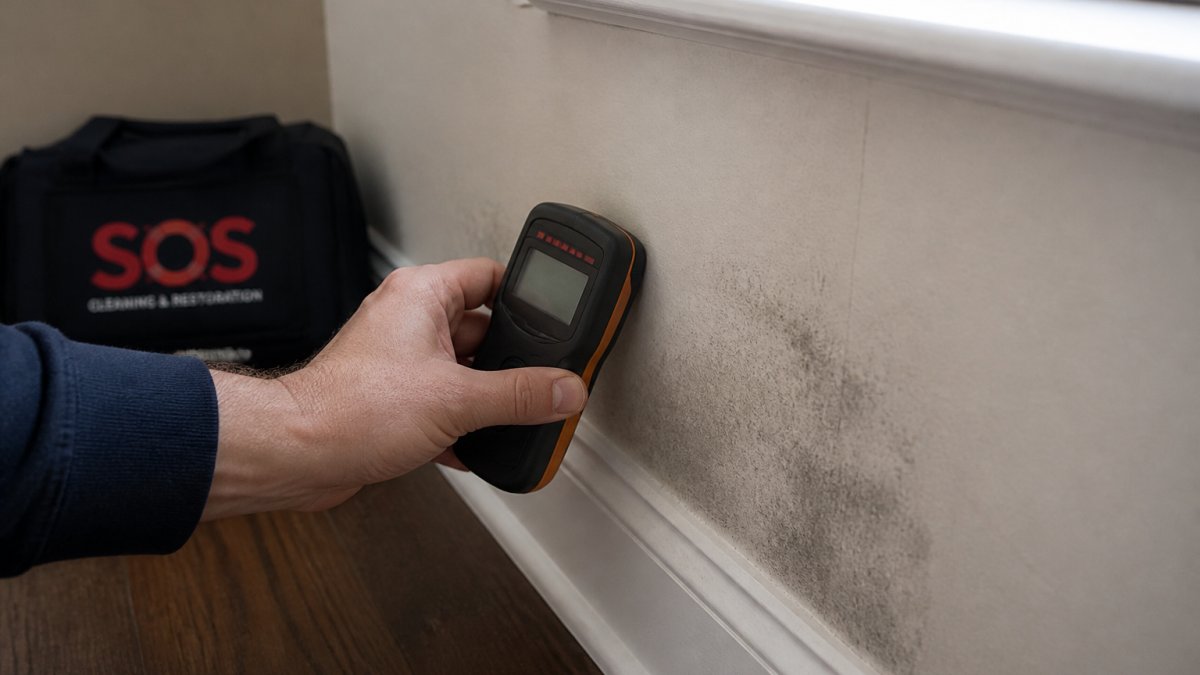
Discoloration is the first thing most people notice, but it is rarely the first thing that happens. Mold behind drywall often starts as a soft, spreading stain or a patch that looks slightly darker than the surrounding paint. It can also show up as bubbling paint, peeling wallpaper, or a surface that feels soft when you press it.
Watch for these signs:
- Dark or greenish spots that grow over days
- Paint that bubbles or flakes without a clear cause
- Wallpaper pulling away at the seams
- A soft or spongy feel near baseboards
- Musty odor that gets stronger in humid weather
The U.S. Environmental Protection Agency notes that mold needs moisture to grow and that fixing the water source is the first step in any cleanup. That guidance matters here: patching the stain without fixing the leak just gives mold a fresh surface to return to.
Where Mold Hides in a House: A Room-by-Room Checklist
Mold tends to settle where moisture lingers and air does not move. That means the spots you clean least are often the spots that grow it first. Professional restoration work removes that trapped moisture before it spreads. See how water restoration in Bloomington protects your property long-term.
Use this checklist to scan your home:
- Bathroom: behind the toilet base, under the sink, along the caulk line in the shower
- Kitchen: under the sink, behind the refrigerator, around the dishwasher seal
- Basement: along the floor-wall joint, behind stored boxes, under stairs
- Laundry room: behind the washer, around the dryer vent, under the utility sink
- Bedrooms: under windows, behind furniture pushed against exterior walls
- Attic: roof leaks, around vents, under insulation that looks damp
- Crawl spaces: joists, subfloor, and any wood that feels soft
A common mistake is checking only the obvious spots. The real problem is usually where air cannot reach.
Use this room-by-room checklist to scan the spots where moisture lingers and air does not move.
| Room | Where to check |
|---|---|
| Bathroom | Behind toilet base, under sink, shower caulk line |
| Kitchen | Under sink, behind refrigerator, dishwasher seal |
| Basement | Floor-wall joint, behind stored boxes, under stairs |
| Laundry room | Behind washer, dryer vent, under utility sink |
| Bedrooms | Under windows, behind furniture on exterior walls |
| Attic | Roof leaks, around vents, damp insulation |
| Crawl spaces | Joists, subfloor, soft wood |
Signs of Mold After Water Damage: What to Watch For in the First 48 Hours
The first two days after water damage decide how bad the mold problem gets. Mold can begin to grow on wet materials within a day or two when conditions are right, so the clock starts the moment water touches a surface. That is why the structural clock after water damage treats the first hours as the most important ones.
Watch for these warnings in the first 48 hours:
- A musty smell that was not there before the leak
- Dark spots on drywall, baseboards, or carpet edges
- Warped or cupping wood floors
- Bubbling paint or soft drywall
- Condensation on interior surfaces that will not dry
If any of these appear, do not wait. Drying the space fast is what stops mold from taking hold.
How to Check for Hidden Mold Yourself Without Causing More Damage
You can check for hidden mold without tearing your house apart, but you have to be careful. Disturbing mold can release spores into the air, so the goal is to look, not to dig.
Start with your senses. Follow the smell. Then check for moisture with a simple meter or a dry paper towel pressed against suspect areas. Look behind furniture, under rugs, and along the edges of rooms where air does not circulate.
Keep these rules in mind:
- Never scrape or sand a suspect area
- Do not spray bleach on porous materials like drywall or wood
- Wear a mask and gloves if you must get close
- Photograph what you find for your records
- Stop if the area is larger than a small patch
If the spot covers more than a small area, or if you find it in multiple places, that is your signal to bring in a professional.
When to Schedule a Professional Mold Inspection
Call a professional when the signs point to a problem you cannot see. A certified inspector can use moisture meters to help locate growth inside walls and under floors.
Schedule an inspection if:
- The musty smell returns after cleaning
- You have had water damage in the past year
- You see signs in more than one room
- Anyone in the home has worsening allergies or breathing issues
- You are buying or selling a home
For homeowners who want a local team to help with mold cleanup, Prior Lake mold cleanup covers mold remediation and water damage support. Our team is IICRC certified, and we offer 24/7 emergency response.
Request Emergency Mold Help in Prior Lake
If you smell something musty right now, or you have had water damage in the last few days, do not wait for the problem to grow. Mold spreads quietly, and the longer it sits, the more it costs to fix. Our 24/7 local response team handles water damage and mold services for homes and businesses in the area.
Here is what you get when you call SOS Cleaning & Restoration:
- 24/7 emergency response, day or night
- IICRC certified restoration experts
- Locally owned and operated in Prior Lake, MN
- Fast response that stops mold before it spreads
If you are searching for mold help “near me” and want a local team that shows up, we are ready.
Frequently Asked Questions
What are the first signs of hidden mold growth in a house?
The earliest clues are usually a musty smell, unexplained allergy symptoms that ease when you leave the house, and small discolored patches on walls or ceilings. You may also notice bubbling paint, warped baseboards, or a persistent damp feeling in one room. Because hidden mold grows where moisture collects, any recent leak or flooding raises the odds. If two or more of these signs appear together, treat it as a reason to investigate further rather than wait.
Can a musty smell mean there is mold behind drywall?
A musty smell is one of the most reliable hints that mold is growing somewhere out of sight, and drywall is a common hiding spot because paper facing holds moisture well. The smell comes from microbial volatile compounds released as mold grows. If the odor is strongest near an exterior wall, under a window, or around a bathroom, check for leaks or condensation there. A smell alone does not confirm mold, but it justifies a closer look or a professional mold inspection.
How do you check for mold after a leak or flood?
Start within the first 24 to 48 hours. Look for water staining, bubbling paint, soft drywall, and lifted vinyl or warped baseboards. Smell each affected room and check behind furniture pushed against wet walls. Use a moisture meter on drywall, trim, and subfloor to find damp spots that look dry. Photograph anything suspicious. If the area stayed wet longer than two days, or covers more than a small patch, call a certified restoration team to assess it.
When should you call a mold remediation professional?
Call a professional when the mold covers more than about 10 square feet, when it returns after cleaning, when you smell it but cannot find it, or when anyone in the home has asthma or a weakened immune system. The same applies after any flood or burst pipe where materials stayed wet for days. A certified team can confirm the source, contain the area, and dry it properly so the growth does not come back.
Mold does not wait, and neither should you. Get started with SOS Cleaning & Restoration and get a certified team on site fast to find the hidden moisture, stop the growth, and restore a healthy home.
