
Last Updated: October 23, 2026
Quick Summary
To stop basement flooding, first get everyone out of the flooded area and shut off power only if you can reach the breaker panel without walking through water. Then find the source: shut your main water valve for a plumbing leak, or fix drainage for rain and groundwater. Never wade into standing water near outlets, cords, or appliances.
- Clean gutters twice a year and extend downspouts at least 6 feet from the foundation.
- Seal hairline cracks with hydraulic cement or polyurethane sealant and check the cove joint.
- Test your sump pump every few months by pouring a bucket of water into the pit.
- Pump out standing water slowly, about a foot at a time, to avoid cracking walls.
- Dry the space within 24 to 48 hours, since mold can start growing within a day or two.
Table of Contents
- What to Do First When Your Basement Is Flooding
- How to Prevent Basement Flooding During Heavy Rain
- Why a Sump Pump Backup System Matters
- Basement Water Drainage Solutions That Actually Work
- Flooded Basement Cleanup: What to Do After the Water Recedes
- Common Mistakes That Make Basement Flooding Worse
- When to Call a Water Damage Restoration Professional
- Frequently Asked Questions
What to Do First When Your Basement Is Flooding
Water in the basement is a race against the clock. Every minute counts, and knowing how to stop basement flooding starts with one rule: safety before cleanup.
Here is your first move. Get everyone, including pets, out of the flooded area. Then follow the steps below in order.
Shut Off the Power and Stay Out of Standing Water
Electricity and water kill. If you can reach your breaker panel without walking through water, shut off power to the basement. If the panel sits in the flooded zone, do not go near it. Call an electrician or your utility company instead.
Never wade into standing water near outlets, cords, or appliances. Water can carry a live current you cannot see. Rubber boots do not make it safe.
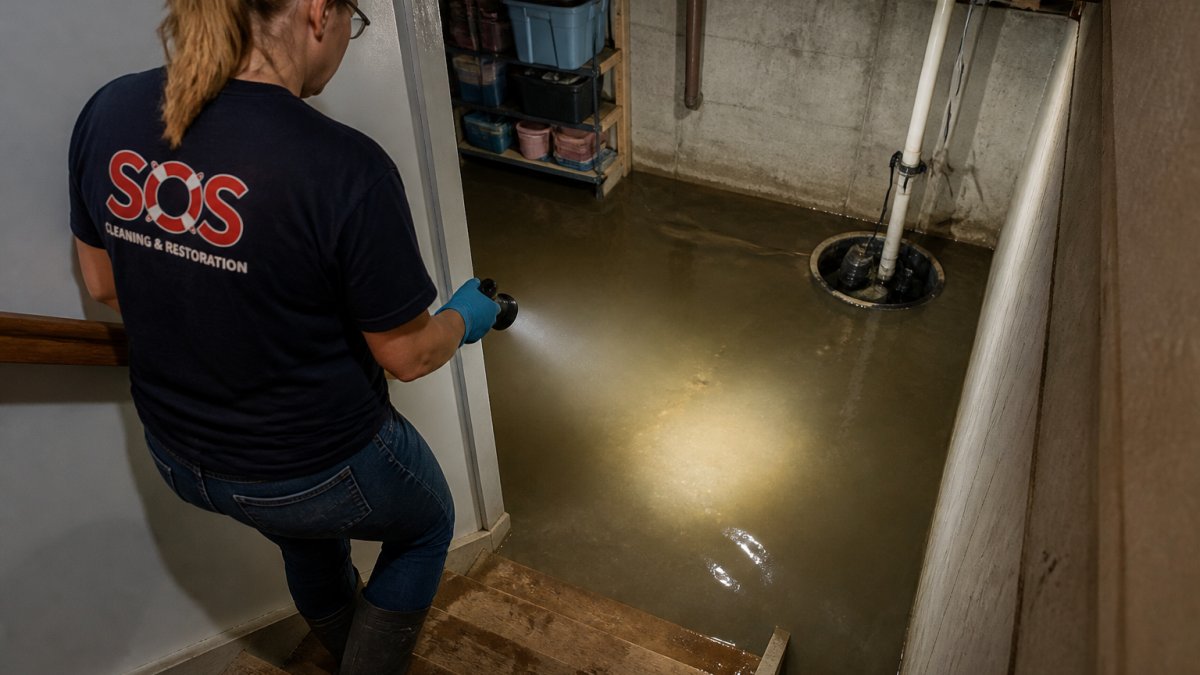
Find the Source: Plumbing Leak vs. Outside Water
The source tells you how to respond. Two main types exist:
- Plumbing leak: A burst pipe, failed water heater, or appliance hose. Shut off your main water valve right away.
- Outside water: Rain or groundwater seeping in through walls, the floor, or a failed sump pump. This needs drainage fixes, not a valve.
Not sure which one you have? Look at the water. Clean, clear water often means a supply line. Muddy or gritty water usually means groundwater.
Never call a plumber for groundwater and never call a drainage contractor for a burst pipe. Misreading the source wastes hours and lets water spread.
How to Prevent Basement Flooding During Heavy Rain
Most rain-driven flooding is preventable. The fix is simple: move water away from the house before it finds a way in. Here is how to prevent basement flooding during heavy rain, starting with the outside of your home.
Redirect Water Away From the Foundation
Water follows the path of least resistance. Give it a better path.
- Clean gutters twice a year so water does not spill over the edge.
- Extend downspouts at least 6 feet from the foundation.
- Grade soil so it slopes away from the walls, not toward them.
- Add a window well cover to keep rain from pooling at basement windows.
Seal the Gaps Water Uses to Get In
Small cracks let in a lot of water. Walk your basement walls and floor and seal what you find.
- Fill hairline cracks in the floor and walls with hydraulic cement or a polyurethane sealant.
- Re-caulk around pipes, windows, and utility openings.
- Check the cove joint where the floor meets the wall. This is a common entry point.
Test your grading with a garden hose. Run water near the foundation and watch where it goes. If it pools against the wall, you have found your problem before the next storm does.
Why a Sump Pump Backup System Matters
A sump pump backup system is a second pump or battery-powered unit that keeps working when your main pump fails or the power goes out. Storms cause both problems at once, which is why backups matter.
Power outages and pump failures happen during the worst storms. A backup system buys you time. Options include:
| Backup Type | How It Works | Best For |
|---|---|---|
| Battery backup | Runs on a charged battery when power fails | Short outages |
| Water-powered | Uses city water pressure to pump | Homes with reliable water supply |
| Dual pump setup | Two pumps share the load | High-water-table areas |
Test your main pump every few months. Pour a bucket of water into the pit and watch it kick on. If it hesitates, replace it before storm season.
Basement Water Drainage Solutions That Actually Work
Good drainage moves water out and keeps it out. The right fix depends on your home, but these approaches cover most cases.
- Interior drain tile: A channel along the inside of the footing that collects water and sends it to the sump pit.
- Exterior waterproofing: Seals the outside of the foundation and adds drainage. More disruptive but very effective.
- French drain: A gravel-filled trench that redirects surface water away from the house.
- Sump pit upgrades: A larger pit and a higher-capacity pump handle more volume.
A common mistake is patching cracks without fixing drainage. The crack comes back. Water always finds the weak point.
Flooded Basement Cleanup: What to Do After the Water Recedes
Flooded basement cleanup is about speed. Mold can start growing within a day or two of a flood, so the clock keeps running after the water is gone. Here is the order of operations.
- Pump out standing water slowly, about a foot at a time. Draining too fast can crack walls under pressure.
- Remove wet carpet, padding, and any soaked belongings.
- Pull up baseboards and check the wall cavities behind them.
- Run dehumidifiers and fans to dry the space.
- Disinfect hard surfaces with a mold-killing cleaner.
Dry Everything Within 24 to 48 Hours
Mold needs moisture to grow (the EPA). Dry the space fast and you cut off its fuel. Keep windows closed and run dehumidifiers, not open air. Open windows in humid weather add moisture back in.
Watch for a musty smell or dark spots on drywall and framing. Both signal mold. If you find either one, a professional mold inspection is the next step. Our team handles mold remediation for homes and rentals across the area.
Common Mistakes That Make Basement Flooding Worse
Some first reactions backfire. Avoid these:
- Walking in water near electricity. This is the top cause of flood-related injury.
- Skipping the sump pump test. A dead pump turns a small leak into a full flood.
- Drying too slowly. Mold takes hold fast when the space stays damp.
- Ignoring the source. Fixing the symptom without the cause means it happens again.
- Patching cracks only. Without drainage fixes, water finds another way in.
The homeowners who avoid repeat floods do two things: they fix drainage, and they keep a working backup pump. Everything else is secondary.
When to Call a Water Damage Restoration Professional
Call a professional when water is deep, when it has reached drywall or insulation, or when mold is already present. These are the situations where DIY cleanup falls short.
Here is when to pick up the phone:
- Standing water is more than an inch deep or covers a large area.
- Water has soaked into walls, ceilings, or flooring.
- You see or smell mold.
- The flood came from a sewage backup, which needs special handling.
- You need it done fast for a rental or commercial property.
SOS Cleaning & Restoration offers 24/7 emergency response and is IICRC certified. We serve Prior Lake, MN and the surrounding Twin Cities metro area. If you are searching for water damage help near me, our team can be on the way. Property managers and homeowners both call us for fast, dependable mitigation.
Frequently Asked Questions
What should I do first if my basement is flooding?
Stay out of standing water and shut off power to the basement at the breaker panel only if you can reach it without stepping in water. Then find the source. If water is rising fast or coming from a burst pipe, shut off the main water valve. Move valuables and electronics off the floor, and call a water damage restoration company if the water is more than an inch deep or has been sitting for hours. Quick action limits how much basement flooding costs you in repairs and mold cleanup.
Can a sump pump backup system prevent basement flooding?
A sump pump backup system keeps your pump running when the power goes out or the primary pump fails, which is exactly when storms cause the most flooding. Battery backup units and water-powered backups are the two common types. Test the backup every few months and check the battery charge. No pump can handle every scenario, but a working backup system is one of the most effective ways to prevent basement flooding during heavy rain and spring snowmelt.
How can I tell whether basement water is coming from a plumbing leak or outside?
Look at timing and location. Plumbing leaks often appear during normal weather, near pipes, water heaters, or appliances, and the water is usually clean. Outside water shows up during or right after heavy rain or snowmelt, seeps in along walls and floor seams, and may carry dirt or a musty smell. Shut off the main water valve and watch: if the water stops rising, the source is a pipe. If it keeps coming in, the problem is drainage or groundwater.
When should I call a water damage restoration company for a flooded basement?
Call a professional when water is deeper than an inch, when it has been standing for more than a few hours, or when sewage is involved. Mold can begin growing within 24 to 48 hours, and household fans rarely dry a basement fast enough to stop it. A certified restoration team extracts water, sets up commercial drying equipment, and checks for hidden moisture behind walls. If you are unsure, a quick call to ask questions costs nothing and can prevent a much larger repair bill.
Basement flooding is stressful, but the steps above work. Fix the drainage, keep a backup pump ready, and act fast when water appears. When the job is too big or mold has already started, SOS Cleaning & Restoration is here. Our team offers 24/7 emergency response, IICRC-certified experts, and fast local service to prevent mold growth and restore comfort and safety to your home. Request emergency help today and get your basement back to dry.
