
Table of Contents
- How to Remove Pet Stains From Carpet: Step-by-Step
- How to Remove Dog Urine Stains From Carpet
- How to Remove Old Urine Stains From Carpet
- How to Get Pet Urine Smell Out of Carpet
- Best DIY Pet Stain Remover for Carpet
- Carpet Compatibility and Safety for Pets and People
- When to Call a Professional for Pet Stains
- Frequently Asked Questions
Last Updated: October 7, 2026
How to Remove Pet Stains From Carpet: Step-by-Step
Pet accidents happen fast, and your first few minutes decide whether you get a clean carpet or a permanent stain. At SOS Cleaning & Restoration, we handle water damage, mold removal, and deep carpet cleaning every day, and the same rules apply whether you are cleaning up after a puppy or a senior cat.
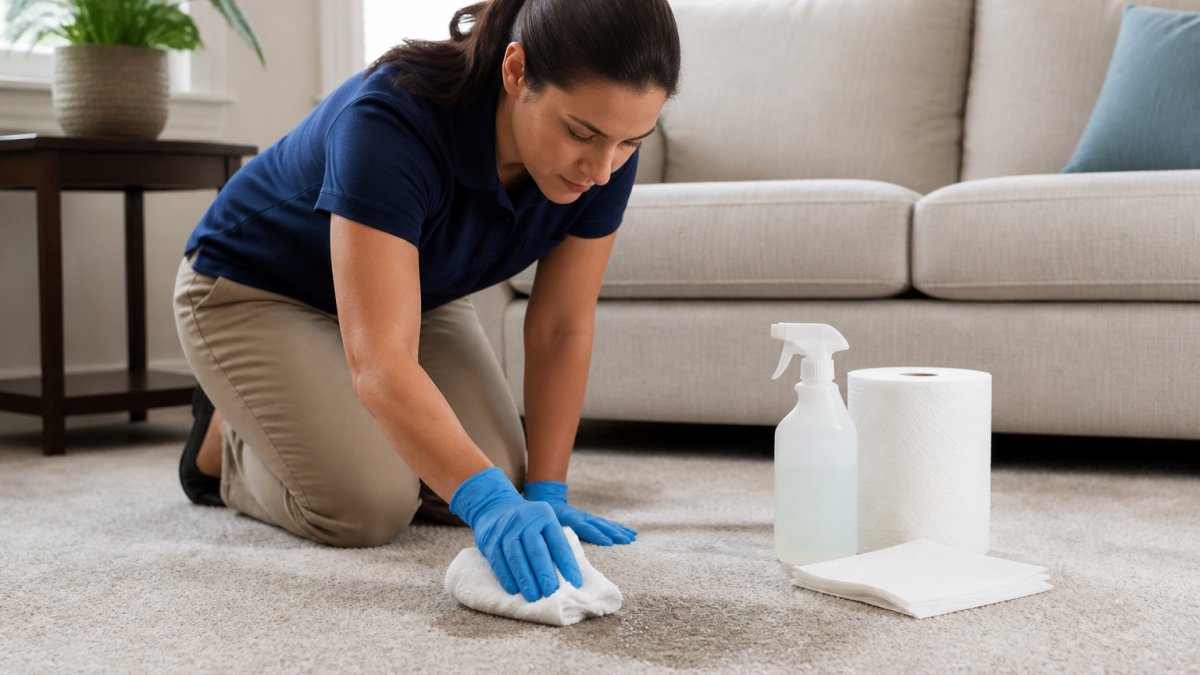
Most store-bought sprays only cover the smell. Urine soaks into the backing and padding, and if it stays wet, mold can start growing within a day or two. The steps below work for urine, feces, and vomit.
Step 1: Blot and Absorb the Wet Stain
Start by pressing, not rubbing. Rubbing pushes the stain deeper into the carpet fibers and spreads it sideways.
- Put on gloves and pick up any solids with a paper towel.
- Lay a clean absorbent cloth or folded paper towels over the wet area.
- Press down firmly or stand on it for 30 seconds.
Fresh stains come up easily if you blot quickly. Skip this step and the liquid reaches the padding, where it becomes a smell problem later.
Step 2: Apply Cleaning Solution and Allow Dwell Time
The best DIY pet stain remover for carpet is an enzyme-based cleaner, because it breaks down the uric acid crystals that cause odor.
Give it dwell time, most enzyme cleaners need 10 to 15 minutes, some longer. Do not let the area dry out; if it starts to, spray a little lukewarm water on top.
Step 3: Rinse, Extract, and Air-Dry
Rinsing matters more than most people think, residue left in the fibers attracts dirt and can pull your pet right back to the same spot.
- Press a clean damp cloth onto the area to lift soap residue.
- Use a carpet-cleaning machine if you have one: two wet passes, two dry passes.
- Without a machine, press dry towels down until they come up clean.
A carpet that stays damp for days grows mold underneath. If you are not sure it dried all the way, call in help.
Urine glows under a blacklight. Turn off the lights and run an ultraviolet flashlight over the carpet to find old spots you missed, especially around baseboards and under furniture.
| Mess Type | First Move | Cleaner | Watch For |
|---|---|---|---|
| Urine | Blot with towels | Enzyme cleaner | Odor returning after drying |
| Feces | Remove solids, then blot | Enzyme cleaner | Leftover residue in fibers |
| Vomit | Scoop, then blot | Dish soap and water | Staining from food dyes |
How to Remove Dog Urine Stains From Carpet
Dog urine is the most common pet stain we see, and it behaves differently from cat urine in three ways that change how you clean it.
First, volume. A large dog can release several ounces in one accident, enough to soak through the backing into the padding.
Second, pH.
Third, behavior. Dogs mark the same spots repeatedly, so an old stain often sits under a newer one.
Step-by-Step for a Fresh Dog Stain
- Blot with dry towels, pressing firmly, until no more moisture transfers.
- Saturate the spot with an enzyme cleaner, two to three inches past the visible edge.
- Cover with a damp towel and let it dwell 15 to 30 minutes. Do not let it dry out.
- Blot, then rinse with clean lukewarm water and blot again.
- Air-dry with a fan. Smell the spot once it is fully dry, that is the real test.
For a fresh stain, one treatment usually does it. For a repeat offender, treat two or three times over a few days, letting it dry completely between treatments.
How to Tell If the Urine Reached the Padding
This is the difference between a fix and a recurring problem. Use these signals:
- The smell returns within a week of drying. That almost always means urine is still in the pad or subfloor.
- The stain reappears as a ring or shadow after cleaning. Wicking pulls residue back to the surface as the carpet dries.
- The carpet feels stiff or crunchy when dry. Dried urine salts leave a residue that surface rinsing will not remove.
If you see two or more of these, surface treatment has hit its limit. The padding may need to be pulled up, replaced, or treated with sub-surface extraction, a job for a professional with a water claw or injection-extraction equipment, not a spray bottle.
Dog-Specific Prevention That Actually Works
- Walk your dog on a consistent schedule. Most indoor accidents in house-trained dogs trace back to a schedule gap, not a behavior problem.
- Clean the spot fully, including the pad if needed. Any leftover scent tells your dog this is the bathroom.
- Use an enzymatic cleaner, not an ammonia-based one, ammonia smells like urine to a dog and encourages re-marking.
A blacklight is the fastest way to find every spot a dog has marked, including ones you never noticed. Run it over the carpet at night with the lights off, and mark each glowing area with a piece of painter’s tape so you can treat them all in one pass.
How to Remove Old Urine Stains From Carpet
Old urine stains are harder because the liquid has dried and bonded to the fibers and padding. The stain may look brown or yellow, and the smell gets stronger on humid days.
Re-wetting is the key. Dried uric acid crystals need moisture to dissolve, so a dry vacuum will not touch them. Here is what works:
- Spray the old stain with lukewarm water and let it sit for 5 minutes.
- Apply an enzyme cleaner and cover the area with a damp towel.
- Let it dwell for 30 minutes or longer, keeping it damp.
- Blot, then rinse with clean water.
- Repeat the whole process if the stain or smell remains.
For severe stains soaked into the padding, surface cleaning will not fix it, the padding may need to come up, or a professional may need stronger equipment.
How to Get Pet Urine Smell Out of Carpet
Odor removal is a separate job from stain removal, and it is the part most DIY attempts get wrong. If you still smell urine after the carpet looks clean, the source is almost always in the padding or subfloor.
Enzyme cleaners digest the uric acid crystals that produce the smell; regular soap and water do not. Here is how to get pet urine smell out of carpet for good:
- Find every soiled area with a blacklight, not just the visible spot.
- Treat each area with enzyme cleaner and let it dwell.
- Keep the area damp for the full dwell time so the enzymes can work.
If the smell returns a week later, the urine reached the padding or subfloor, spot treatment stops working and you need deeper extraction.
Never mix hydrogen peroxide with vinegar or an enzyme cleaner in the same bottle. The combination can cancel out both products or damage the carpet, and it can be unsafe to breathe.
Best DIY Pet Stain Remover for Carpet
There is no single best cleaner for every mess. The right choice depends on the stain age, the carpet, and whether the problem is the stain or the smell.
Enzyme-Based Cleaners
Enzyme-based cleaners are the best choice for urine and other protein-based messes. They use live enzymes to break down the uric acid that causes odor, treating the smell at the source instead of masking it. Look for a cleaner labeled for pet stains and follow the dwell time on the bottle.
Dish Soap and Water
One teaspoon of liquid dish soap in two cups of lukewarm water works well for fresh, mild stains like vomit, lifting grease and residue without harsh chemicals. The catch: dish soap leaves residue, so rinse thoroughly or the spot will attract dirt.
Hydrogen Peroxide on Colorfast Carpet
Hydrogen peroxide can lift stubborn stains and lighten discoloration, but only on colorfast carpet. Test it first on a hidden spot: mix one part peroxide with a few drops of dish soap, apply lightly, let it sit a few minutes, then blot and rinse well. Never use peroxide on wool, silk, or any untested dye.
| Cleaner | Best For | Dwell Time | Main Risk |
|---|---|---|---|
| Enzyme cleaner | Urine, odor, old stains | 10-30 min | Needs moisture to work |
| Dish soap and water | Fresh, mild stains | 5-10 min | Leaves residue if not rinsed |
| Hydrogen peroxide | Tough stains, colorfast carpet | 3-5 min | Bleaching or dye damage |
Carpet Compatibility and Safety for Pets and People
Not every cleaner is safe for every carpet or every pet. Test before you treat, and keep your pet out of the room until the area is fully dry.
Carpet Fiber, Dye, and Backing Compatibility
Before applying anything, test for colorfastness on a hidden spot like inside a closet or under furniture. Apply a little cleaner, wait a few minutes, then blot with a white cloth.
Fiber type matters too: wool and other natural fibers can be damaged by peroxide and strong cleaners, while synthetics handle most enzyme products well.
Safety Guidance for Pets and People
Pet-safe cleaning means two things: use products labeled safe for pets, and keep pets away until the carpet is dry. A simple checklist:
- Read the label and follow it exactly.
- Keep pets and kids out of the treated room until dry.
- Ventilate the room with a fan or open window.
If your pet licks a treated spot, call your vet. Even pet-safe cleaners can cause stomach upset in large amounts.
When to Call a Professional for Pet Stains
Most pet stains are a DIY job; some are not. The difference comes down to where the contamination is, not how bad the stain looks. Use this framework to know when to stop treating and start calling.
Escalate If Any of These Are True
- The odor returns after the carpet is fully dry. This is the single strongest signal that urine reached the padding or subfloor. Surface cleaning cannot fix contamination it cannot reach.
- The stain has been there for more than a few weeks. Dried uric acid crystals bond to fibers and pad and need sustained moisture and enzyme activity to break down; long-set stains often need sub-surface extraction.
- The same spot keeps getting soiled. Residual scent is likely still in the pad, and your pet is responding to it.
What a Professional Actually Does Differently
It is not just stronger chemicals. The equipment matters more than the product:
- Sub-surface extraction. A water claw or injection-extraction tool flushes cleaning solution into the pad and pulls it back out with the dissolved contamination, something a spray bottle and towels cannot do.
- Moisture detection. Technicians use moisture meters and thermal imaging to find invisible contamination and confirm the area is dry before they leave.
- Targeted odor treatment. Persistent odor sometimes requires sealing the subfloor after cleaning, not just cleaning the carpet.
Clean, Repair, or Replace?
The right answer depends on how far the contamination went:
| Situation | Typical Best Option |
|---|---|
| Stain and odor confined to carpet surface | DIY or routine professional cleaning |
| Urine in the padding, subfloor still clean | Pad replacement plus carpet cleaning |
| Urine in the padding and subfloor, odor persistent | Pad replacement, subfloor treatment, sometimes carpet replacement |
| Carpet delaminated, moldy, or heavily stained across a large area | Carpet replacement is often the more cost-effective call |
A professional can tell you which situation you are facing after an inspection. Getting that answer before spending more on DIY products usually saves money.
What to Have Ready When You Call
- The approximate age of the stain, or your best guess.
- How many spots are involved and roughly how large.
- The carpet fiber if you know it, or a photo of the label.
Do not seal a subfloor or paint over a stained area to hide odor. Sealing over contamination that is still wet traps moisture and can make the mold problem worse. Clean and dry first, then seal only if a professional recommends it.
If the damage is tied to a burst pipe or flooding, the same escalation logic applies. Water damage and pet stains share the same enemy: trapped moisture.
Frequently Asked Questions
Will hydrogen peroxide remove old pet stains from carpet?
Hydrogen peroxide can lighten old urine stains on colorfast carpet, but it will not break down the odor-causing crystals. Always test a hidden spot first. Mix 1 part 3% hydrogen peroxide with 3 parts water, apply lightly, and let it sit for a few minutes. Follow with an enzyme-based cleaner to address the smell. Never use peroxide on wool, silk, or dark-dyed carpets because it can bleach or damage the fibers.
Can old urine stains be removed?
Old urine stains are harder to remove than fresh ones because the uric acid crystals bond to carpet fibers and padding over time. You can often lift the visible stain with repeated treatments of an enzyme-based cleaner, followed by a rinse and extraction. If the stain has soaked into the padding or the odor returns after cleaning, the padding may need to be replaced. A professional can assess whether the carpet can be saved.
How do I remove dog urine stains from my carpet?
For dog urine, blot up as much liquid as possible with paper towels or an absorbent cloth. Apply an enzyme-based cleaner that targets uric acid, let it dwell for the time listed on the label, then blot and rinse. For set-in stains, repeat the treatment. Avoid steam cleaners because heat can set the stain and the odor. If the urine has reached the padding, you may need a professional extraction.
When should I call a professional carpet cleaner for pet stains?
Call a professional when the stain has soaked into the padding, when odor returns after DIY cleaning, or when the affected area is larger than a dinner plate. Professionals use truck-mounted extraction and commercial-grade enzyme treatments that reach deeper than consumer machines. If mold or recurring odor is present, a certified restoration company can also check for hidden moisture and damage under the carpet.